
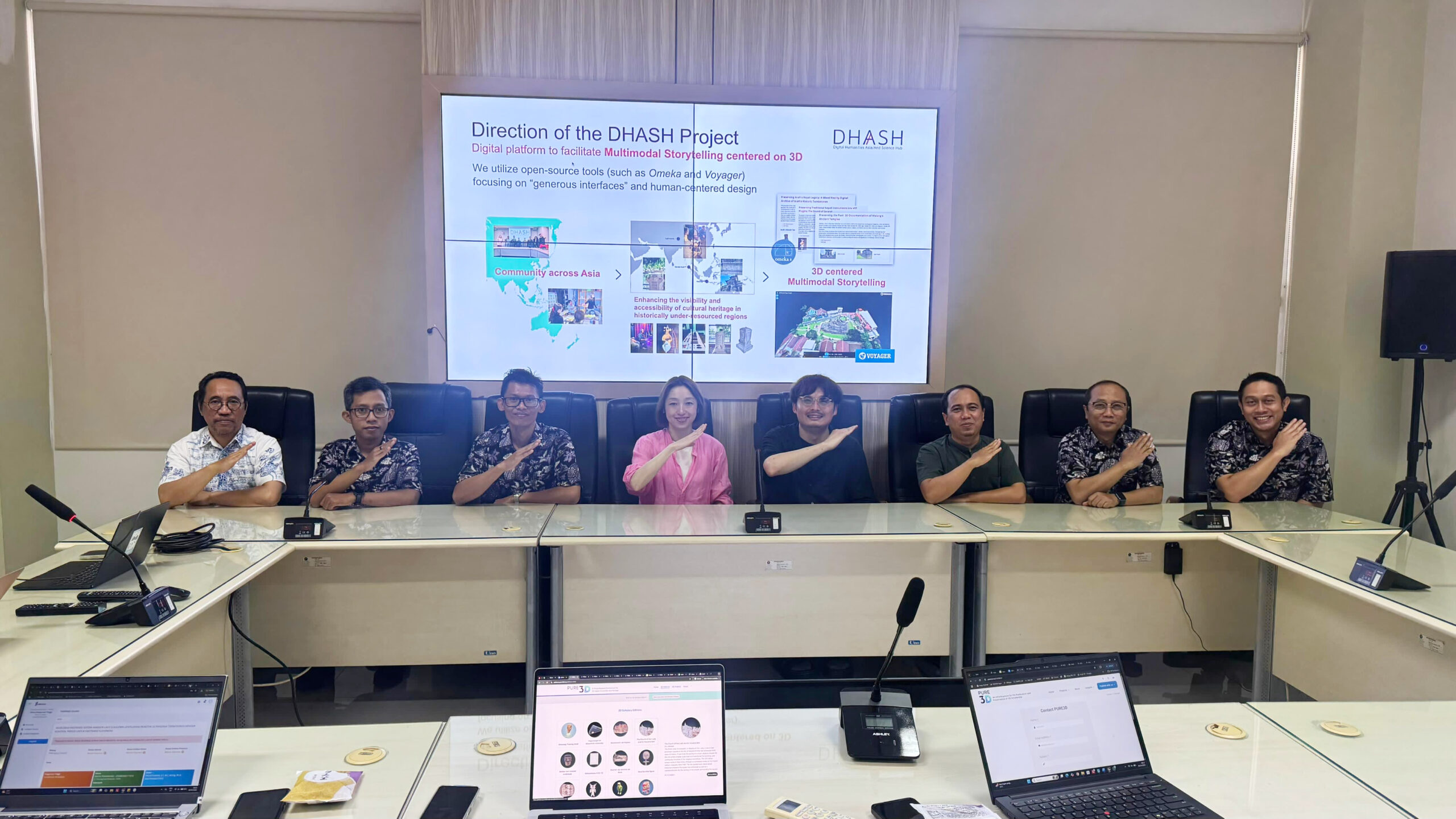
* Feature image caption: (from the left) Kasyful Amron (UB), Rizal Setya Perdana (UB), Eko Setiawan (UB), Eliko Akashi (Keio University), Goki Miyakita (Keio University), Agung Setia Budi (UB), Prof. Achmad ‘Abazh’ Basuki, Bayu Priyambadha (UB)
On 9 April 2026, as part of the SOI Asia DHASH Project, a recent visit brought together Brawijaya University, Indonesia (UB) and Keio University, Japan (Keio) to advance collaborative efforts in digital cultural heritage preservation. DHASH, a Digital Humanities (DH) focused Open Science project, involves multiple universities across APAC and supports communities in documenting, preserving, and sharing cultural resources sustainably.
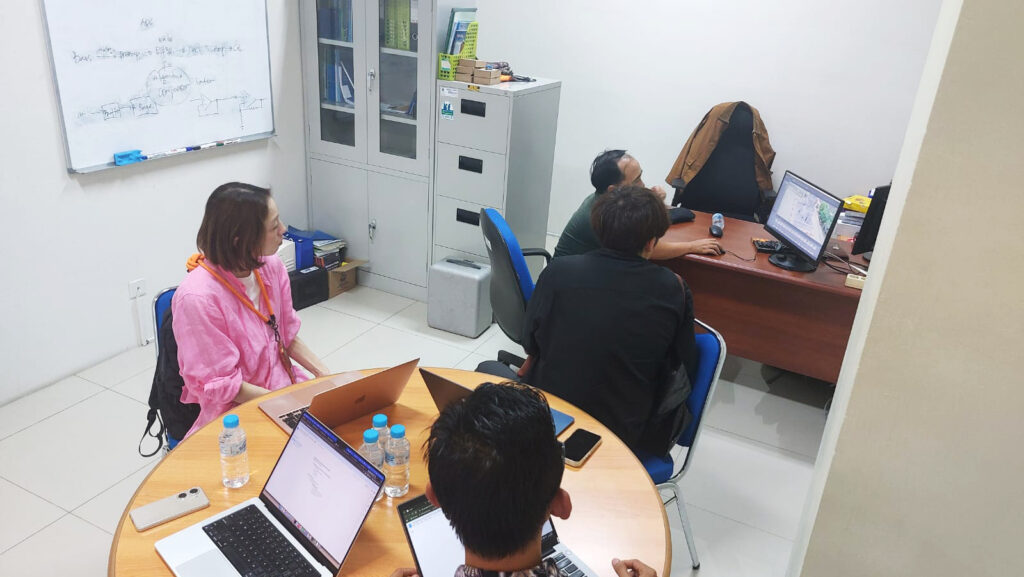
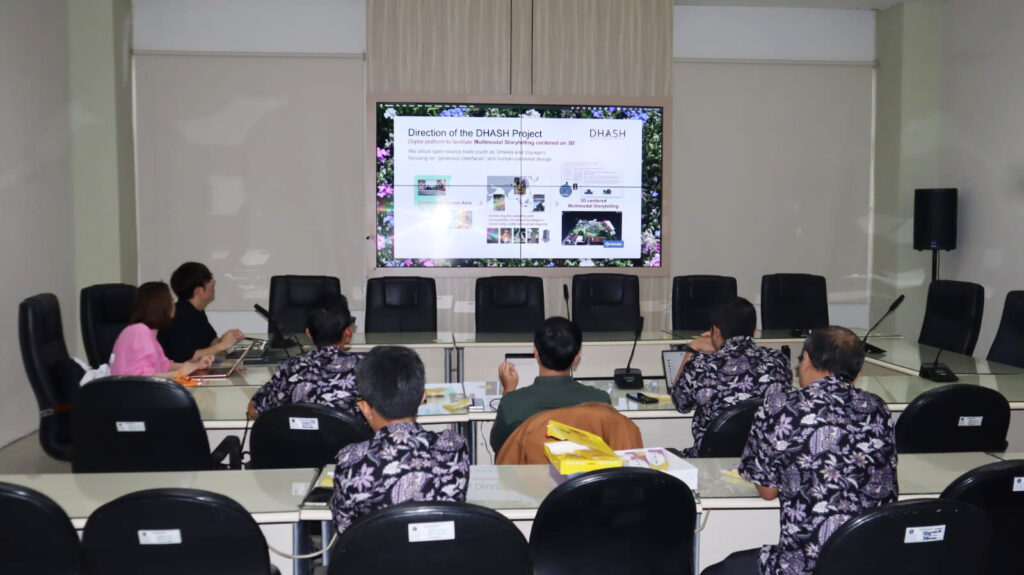
During the visit, UB and Keio team members engaged in practical consultations and meetings using the Voyager platform, focusing on the on-the-ground application of digital preservation methods. Discussions covered hands-on use of Voyager, reviewed existing workflows, and explored strategies for sustaining cultural resource documentation in the Malang district.
A central part of this visit focused on conceptualising an APAC-origin digital preservation platform. Members explored essential elements for such a platform, collaborative workflows, and meaningful milestones to guide its development. The discussion also addressed the preservation and use of Candi structures—ancient temple complexes in Indonesia, many dating back to the Majapahit period. While originally built as Hindu (and sometimes Buddhist) temples, many of these sites no longer retain their original form, making documentation and digital preservation increasingly important.
By digitally documenting and reconstructing these cultural assets, the project aims to generate both local and global outcomes. Locally, such efforts contribute to strengthening community identity, supporting heritage education, and enabling sustainable cultural tourism. Globally, they expand access to cultural data, facilitate comparative research, and contribute to the development of shared digital preservation methodologies.
Notably, UB’s robust institutional network, combined with its integration of interdisciplinary expertise, provides a strong foundation for advancing rich and comprehensive digital preservation of these cultural assets. This capacity also positions UB to contribute to the development of a regional digital platform for cultural exchanges across APAC, serving as a key driver in enabling high-quality documentation and ensuring long-term sustainability.
The visit ultimately reinforced the project’s broader vision: Building a more resilient society in APAC by safeguarding cultural knowledge and enabling its sustainable use across generations. Expected results include the creation of digital archives, the strengthening of collaborative networks, and the enhancement of local capacity for cultural data management.
For more about DHASH and its activities, please visit: https://dhash.space/