Category: Meetings

  • Collaboration, Innovation, and a New Home: The 59th SOI Asia Meeting in Review

    Collaboration, Innovation, and a New Home: The 59th SOI Asia Meeting in Review

    The 59th SOI Asia Meeting took place from March 6th to 8th, 2025, at Pacifico Yokohama in Kanagawa and Haneda Innovation City (HICity) in Tokyo. Held back-to-back with APAN 59, this three-day event brought together educators, researchers, students and colleagues from across the Asia Pacific region to discuss and collaborate on key initiatives in education, research, and digital identity.

    This year, the SOI Asia community celebrates 30 years of collaboration, growth, and innovation. As the community reflects on its past achievements, it is also looking ahead, preparing for the next five years.

    Day 1 Highlights: SOI Asia Showcase and Inxignia Key Signing

    The first day of the meeting focused on project presentations and demonstrations, showcasing innovative projects and research conducted by students from SOI Asia partner institutions. The Inxignia Key Signing Ceremony marked a significant milestone, emphasizing the importance of trust and security in digital credentials.

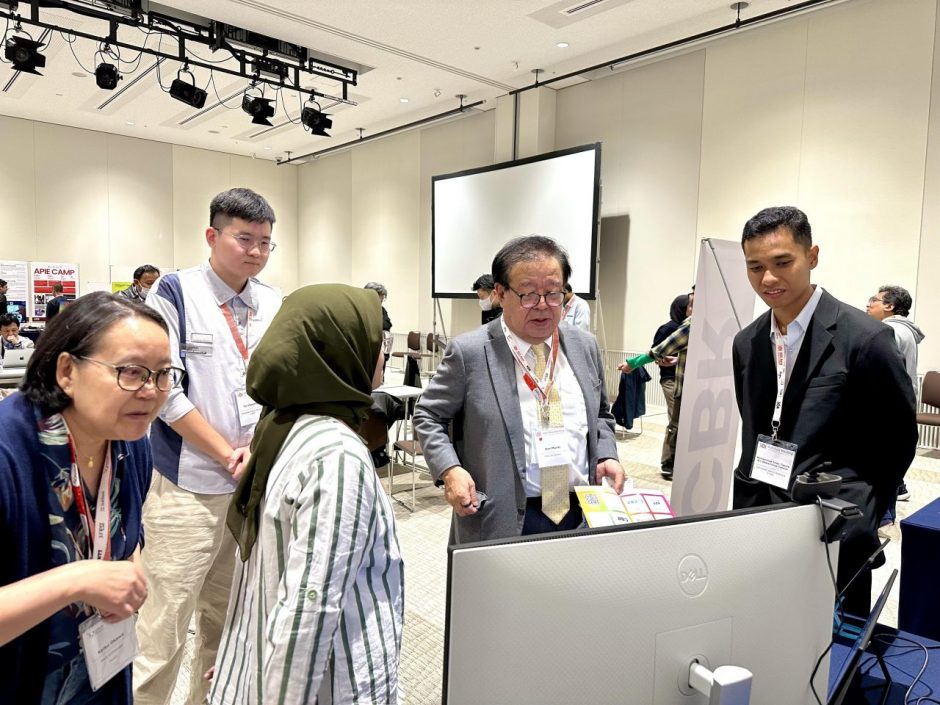
    In addition to the presentations, the SOI Asia Showcase “Resilient Society” provided a dynamic and engaging opportunity for participants to explore the core concepts, latest updates, and outcomes of SOI Asia’s main activities: APIE, EBA, CBR, Inxignia, and the collaboration with ARENA-PAC. The exhibition featured a stamp rally, where participants visited booths, collected stamps, and received a special physical badge crafted by the students. The event concluded with encouraging remarks from Prof. Jun Murai, who emphasized the inspiring presence of a new generation of SOI Asia members, highlighting the importance of building a resilient and lasting future through collaboration and innovation.

    Day 2 Highlights: Meeting Opening and Panel Sessions on Collaboration in Asia Pacific

    The second day of the meeting began with an opening ceremony featuring welcoming remarks by Professor Jun Murai (SOI Asia, Keio University), Shinji Shimojo (APAN59 Japan Organizing Committee Chair), and Rajnesh Singh (Chief Executive Officer, APNIC Foundation). Professor Murai shared updates on the collaboration with APAN, which led to the signing of a Memorandum of Understanding (MoU) between the two institutions during the APAN 59. Shimojo emphasized the importance of ongoing collaboration, while Singh celebrated the progress and achievements of SOI Asia.

    Following the opening, the day featured a series of panel sessions exploring collaboration opportunities in the Asia Pacific region:

    • Trust & Identity Collaboration: The panel, chaired by Achmad Husni Thamrin (Keio University), featured insights from Shigeya Suzuki (Keio, JP), Alwin Melkie Sambul (UNSRAT, ID), and Erik Kikkenborg (NORDUnet, NO). Shigeya emphasized the need for incremental deployment of digital identity solutions and the importance of policy validation. Alwin introduced the MicroCASA project, highlighting the role of AI and digital credentials in education. Erik shared insights from the Digital Credentials 4 Europe initiative, stressing the need for standardized approaches to build inter-organizational trust.
    • Network Research Collaboration: Chaired by Franz A. de Leon (DOST-ASTI, Philippines), this session included Bayani Benjamin Racadio Lara (DOST-ASTI, PH), Achmad Basuki (UB), and Francis Lee Bu Sung (SingAREN, SG). Bayani discussed the potential of Open RANs for network expansion, while Achmad shared developments in the Indonesian research network (IDREN). Lee highlighted Singapore’s experience with satellite-based internet and the hybrid approach needed for underserved regions.
    • Internet Engineer Education: Led by Keiko Okawa (Keio University), the discussion focused on the future of internet engineering education. Katsuhiro Horiba (AWS) and Peter Blee (APNIC) discussed AI’s impact on training programs. Kotaro Kataoka (IIT Hyderabad) shared insights on the challenges of making internet engineering an aspirational career, noting the shift in perception toward AI and its integration into the profession.

    Day 3 Highlights: SOI Asia Haneda Campus Opening and Strategic Planning

    The third day of the meeting began with the grand opening ceremony of the new SOI Asia Haneda Campus, which will serve as the organization’s headquarters in Tokyo. The event celebrated a new milestone for SOI Asia, reinforcing its commitment to fostering collaboration, education, and research across the Asia Pacific region. The ribbon-cutting ceremony, attended by distinguished guests, symbolized the start of this exciting new chapter for SOI Asia.

    Following the opening ceremony, the Directors’ Meeting focused on strategic planning for the next five years. Key discussions included expanding education initiatives to high school students, enhancing shared curricula and micro-credentialing through platforms like INXIGNIA, and leveraging data for research.

    The meeting also hosted the signing ceremony of a Memorandum of Understanding between Keio University and the Asian Institute of Technology (AIT). AIT will host the 60th SOI Asia Meeting in Bangkok in late October 2025.

    The discussions held during the 59th meeting have set a strong foundation for future collaborations, particularly in education, research, and digital identity, as the community continues to contribute to a resilient and inclusive Asia Pacific region.

    The event concluded with a dinner at Haneda, celebrating the collaborative spirit of the SOI Asia community. Professor Jun Murai reflected on how this meeting, likely the largest in the community’s history, was driven by a new and younger generation of SOI Asia members. He noted that in the past, young members were often quiet and passive, but now they are leading the way, especially through the impressive showcase on day one. This shift is a testament to the community’s efforts in nurturing new talent and ensuring a sustainable and resilient society. “This is what a resilient society really is!” Murai concluded.
  • Recap of the 58th AI³ & SOI Asia Directors Meeting: Exploring New Initiatives and Future Directions

    Recap of the 58th AI³ & SOI Asia Directors Meeting: Exploring New Initiatives and Future Directions

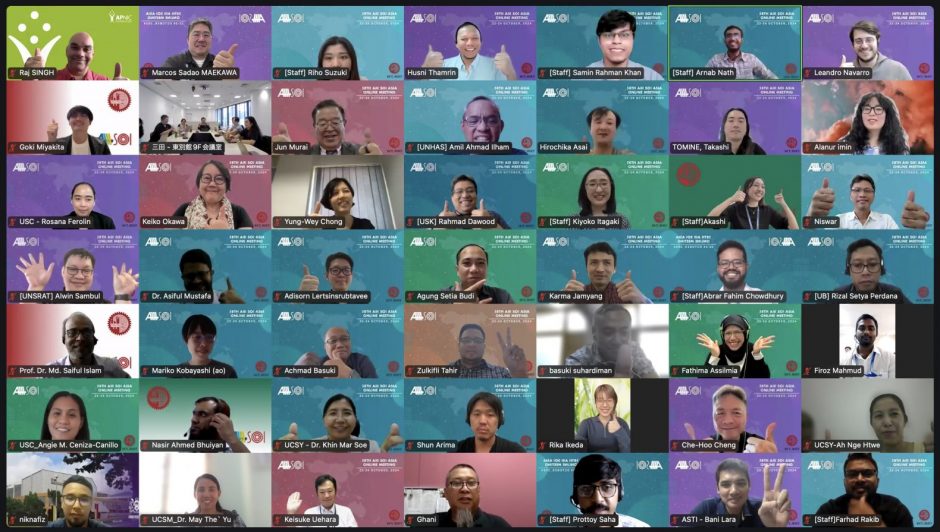
    On October 22-24, 2024, the 58th AI³ & SOI Asia Joint Meeting was held online, co-organized and hosted by the Bangladesh University of Engineering and Technology (BUET). This meeting brought together 78 participants from partner institutions and guests in 17 economies, focusing on collaborative discussions, research presentations, and panels to shape the future of research and education in the Asia-Pacific region.

    Day 1: Keynote and Information Sharing

    The event began with a keynote speech by Prof. Jun Murai (Keio University) as part of the ICICT 2024 conference at BUET. In his keynote, Murai discussed the development of the ARENA-PAC network, emphasizing its role in the Asia-Pacific region’s research and education sectors. He also highlighted the critical need for digital data interoperability and explored the future of AI in the Internet ecosystem, encouraging the audience to think about these issues proactively.

    Following the keynote, Prof. Saiful Islam, representing BUET, and Prof. Jun Murai, on behalf of SOI Asia, delivered opening remarks. Raj Singh, making his first appearance as the CEO of the APNIC Foundation, shared his vision and the initiatives supported by the Foundation to advance digital development in the region. He also stressed the importance of fostering collaboration across economies and institutions.

    The first day also featured site updates from partner institutions, where each member shared their current progress, ongoing projects, and future plans. A crucial part of this session involved breakout rooms, where participants engaged in focused discussions before reconvening to summarize their findings with the entire group. These updates allowed for the exchange of insights and started discussions that will potentially lead to further cooperation.

    Day 2: Research Presentations and Panel Discussions

    The second day began with research presentations followed by two panel sessions.

    Four students’ presentations covered various topics, ranging from genetics and cybersecurity to gesture-recognition technology and hybrid satellite-terrestrial networks.

    • Prottoy Saha – Bangladesh University of Engineering and Technology (BUET)
      “Phylogenetic tree estimation from gene trees in the presence of gene tree discordance”
    • Philip Virgil Astillo – University of San Carlos (USC)
      “Security Vulnerability Awareness for Piso Wi-Fi Public Networks in the Philippines”
    • Md Rafiul Huda – Bangladesh University of Engineering and Technology (BUET)
      ”A Real-Time Motion Controlled Wheelchair based on Hand-Gesture-Recognition”
    • Muhammad Irfan Tijanie Bin Mohammad Tasnim – Universiti Sains Malaysia (USM)
      “TCP Splitting over GRE for Hybrid Satellite-Terrestrial Network”

    Strengthening Collaborative Synergies: Building Capacity Across SOI Asia

    Chaired by Keiko Okawa (SOI Asia director, Keio University), this panel provided an overview of SOI Asia’s capacity-building initiatives. Achmad Basuki (Universitas Brawijawa) elaborated on the APIE and CBRs (Collaborative-Based Research) programs, stressing the importance of human connections and lifelong learning in fostering strong, collaborative networks.

    Dianing Ratri (Institut Teknologi Bandung) shared the progress of the EBA Kalimantan fieldwork program, which aims to provide environmental education and sustainability training. Elisha Heppner (APNIC Foundation) presented the ISIF grants program and showcased grantee initiatives in Bangladesh, Indonesia, and Timor Leste. Heppner highlighted the synergistic effects of collaboration among diverse projects and institutions, noting how these initiatives improve conditions in various economic areas.

    Keiko Okawa wrapped up the panel by outlining key discussion points, such as enhancing synergy between programs, encouraging youth engagement, and creating unique learning experiences.

    Micro-credentials: How to drive development and adoption of digital evidence in lifelong learning 

    Chaired by Achmad Husni Thamrin, this panel explored the growing importance of micro-credentials in lifelong learning.

    Anusha Achuthan (Universiti Sains Malaysia) discussed Malaysia’s approach to quality assurance in stand-alone micro-credentials. At the same time, Carlos Delgado Kloos (Universidad Carlos III de Madrid) examined the shift from traditional paper-based credentials to digital badges, addressing the opportunities and challenges of this transition. Peter Sy (University of the Philippines Diliman) highlighted the complexity and ongoing improvements in digital credentialing systems.

    Shigeya Suzuki (Keio University) introduced Inxignia, SOI Asia’s new verifiable credential ecosystem. With Inxignia, SOI Asia and partners aim to create a robust platform for digital certificates, and Suzuki emphasizes the importance of interoperability across different systems.

    Day 3: Infrastructure and Open Science Discussions

    The last day comprised two panel sessions, one on Infrastructure and another on Research, and was concluded with a discussion on activities for 2025 and future directions for the community.

    REN applications and collaborations in developing REN further

    Md. Saiful Islam (BUET) chaired the first panel of the day on the topic of infrastructure for research and education network (REN) collaborations. The presentations and discussions focused on REN infrastructure’s development and future applications.

    Takashi Tomine (ARENA-PAC) highlighted ARENA-PAC’s core vision and presented recent demonstrations of the high-speed network for research and education. Following Tomine, Flavio Cardoso Neves (ANC—Communications National Authority in Timor Leste) provided an overview of Timor Leste’s connectivity landscape and introduced efforts to improve connectivity in the future. Mohammad Tawrit (BdREN) presented the application of REN and discussed collaboration with TEIN and other networks such as NORD.

    In the Q&A, Murai provided more input about his vision for ARENA-PAC, emphasizing that the network is to connect RENs in the Asia Pacific region, as other big networks have been doing in the US and Europe. Islam closed the session with a list of recommendations.

    Future direction of research areas and how to practice Open Science in research

    The final session, chaired by Rubaiyat Hossain Mondal (BUET), focused on Open Science and the future direction of research in the Asia-Pacific.

    Yung-Wey Chong (USM) stressed the importance of integrating cybersecurity and environmental sustainability into the design of new technologies. Adisorn Lertsinsrubtavee (Asian Institute of Technology) explored the various dimensions of IoT research and Open Science. Ai Sugiura (UNESCO) shared the definition of Open Science and expectations for the implementation in a global scale. Goki Miyakita (Keio University), introduced SOI Asia’s open science-related initiatives.

    During the discussions, panelists agreed that interdisciplinary collaboration is pivotal and raised the importance of creating a platform for data sharing within the community.

    Future Directions and Closing Remarks

    At the last meeting session, Keiko Okawa shared exciting news about next year’s celebrations. In 2025, SOI Asia will celebrate its 25th and AI³’s 30th anniversary. The 60th meeting will also be held next year. Okawa also announced that Keio University will host the next meeting from 6 to 8 March 2025 in Yokohama, Japan. She also shared details about an upcoming MoU with APAN, signaling continued growth and collaboration.

    The SOI Asia community would like to thank the BUET organizing team for co-organizing and hosting this event despite the turbulent situation in Bangladesh. We look forward to welcoming everyone to Yokohama, Japan, in March 2025!

  • 59th SOI Asia Meeting in Yokohama, Japan – March 6-8, 2025

    59th SOI Asia Meeting in Yokohama, Japan – March 6-8, 2025

    We are pleased to announce that the 59th SOI Asia Meeting will be held in a hybrid format, both online and in person, in Yokohama, Japan. The event will be hosted by Keio University (Keio) from March 6-8, 2024.
    This meeting is partially held at the same venue as APAN59 on March 3-7, 2025.  

    MEETING WEBSITE

    Meeting Report is available from here (PDF)

  • 57th AI³ & SOI Asia Directors Meeting will be held on June 20-21, Cebu, Philippines (co-hosted by University of San Carlos)

    57th AI³ & SOI Asia Directors Meeting will be held on June 20-21, Cebu, Philippines (co-hosted by University of San Carlos)

    We are glad to announce that 57 AI³ & SOI Asia Directors meeting will be held hybrid (Online and Jakarta), co-hosted by University of San Carlos in Cebu, Philippines.

    Meeting WEBSITE is HERE

  • 56th AI³ & SOI Asia Join Meeting in USM – Summary

    56th AI³ & SOI Asia Join Meeting in USM – Summary

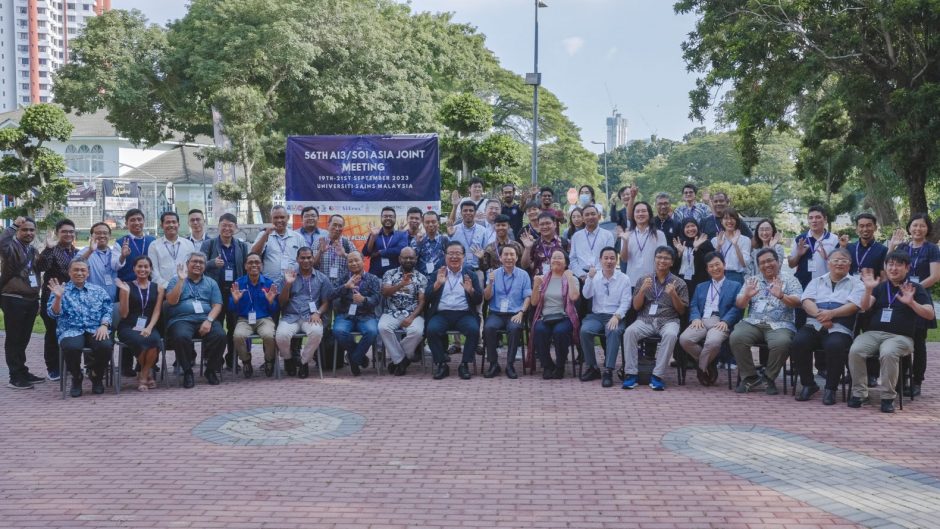
    On September 19-21, 2023, USM (Universiti Sains Malaysia) hosted the 56th AI3 and SOI Asia Joint Meeting in their campus located in Penang, Malaysia. This was the seventh time that the institution held the meeting.

    DAY 1

    The first day of the meeting started with research presentations by researchers from Syiah Kuala University (USK, Indonesia) and Tribhuvan University (TU, Nepal). Yogi Setiawan (USK) presented his research on the design of a solar power system for water pump houses. Daniel Rafi and Nada Nabela (USK) shared the highlights of the design of a more energy-efficient IoT device-powered water flow for measuring water consumption. Sushant Chalise (TU) introduced the results of a case study from Nepal that uses hybrid models to estimate the forecasting accuracy of global solar radiation.

    In a second block of research presentations, Community-based research (CBR) intern teams presented their work progress on IoT-based technology in different fields. Yu Chenning (USM), Shaquille Na (USK) and Muhammad Arsyada (UB) investigate the potential of IoT-based technology for collecting data on public transportation. The team formed by Muhammad Al-Assad (USK), Zhehui (USM), Made Harilegawa (UB), and William Adam (UNHAS) explores artificial IoT to classify and predict quality in smart agriculture. Tareq Ali (USM) closed the session with this proposal of a novel model for DDoS attack detection.

    Prof. Dato Dr. Bahari Belaton, Dean of the School of Computer Science, USM
    (In the center) Selvakumar Manickam, director of the National Advanced IPv6 Centre, Malaysia

    In the opening remarks, Prof. Dato Dr. Bahari Belaton, Dean of the School of Computer Science, welcomed all participants and did a retrospective of the relationship of USM with SOI Asia & AI3 community. Selvakumar Manickam (director of the National Advanced IPv6 Centre, Malaysia) shared his appreciation and delivered his wishes for more collaboration in the next decade. Prof. Jun Murai thanked the organization team in USM and recalled the long history of active involvement and contributions to this community. Murai closed the opening session emphasizing his wishes for this community to keep supporting university and research in Asia-Pacific.

    The following session opened the stage for guest speakers Gary Leong (Vitrox) and Liang Zheng Gooi (White Room). Murai also made additional considerations on the latest activities of ARENA-PAC in Indonesia and Singapore.

    In the afternoon, the highlight was the updates of SARENA-PAC delivered by Keio, DOST-ASTI and USM and the discussion regarding latency.

    After the end of all sessions, all participants attended a welcome dinner kindly sponsored by USM. It was also time to celebrate Prof Wan Tat Chee’s long-year contribution and hard work to support this community since early times prior to his retirement.

    (In the center) Prof. Wan Tat Chee receiving compliments from Prof. Jun Murai.

    DAY 2

    The second day of meetings was focused on project updates. ARENA-PAC opened discussions on cloud services provided by the network, particularly those that would benefit CBR activities and students in partner universities. Prof. Keiko Okawa, director of SOI Asia, expressed her wish to have all partners, including potential future ones such as Bhutan, able to access ARENA-PAC. AI3 director Achmad Husni Thamrin closed the session by discussing the AI3 overlay network over ARENA-PAC, called SARENA-PAC.

    Discussions on the second day focused on project activities.

    Discussion on CBRs focused on organizational aspects, introducing the CBR scheme for new participants and the CBR administrative process. The proposed cycle aims to optimize operations, monitoring and evaluation. Participants also suggested the expansion of research fields to infra-structure and data governance and more options for internships in Japan.

    The Asia Pacific Engineering (APIE) Program shared updates on the latest activities, such as the APIE Camp held at the Institut Teknologi Bandung (ITB), Indonesia, and internship programs. Noriatsu Kudo, lead of APIE, presented plans for an advanced camp in Keio, the upcoming camp hosted by USM, the upcoming batch schedule, and a new course on Internet governance. The updates were followed by discussions on the integration with the university curriculum and learning progress tracking/monitoring.

    The Evidence-based Approach (EBA) project leads Kei Uehara and Eliko Akashi introduced the latest information about EBA activities, including upcoming activities such as the fieldwork on cultural heritage preservation in Hokkaido, designed in collaboration with the Keio Museum Commons (KeMCo) and EBA faculty meeting in Keio, both in Japan. During the discussion part, USM expressed their will to host a fieldwork program in the strait of Malaka in 2024. Other participants raised accreditation as an essential topic to be discussed further.

    The session on the micro-accreditation platform Inxignia discussed different approaches in each partner institution. Andrey Ferriyan and Rika Ikeda, leads of Inxignia, also called for collaboration and got hands raised by several institutions, including UB, UNSRAT, ITB and USK.

    This time, SOI Asia opened a session on Open Science and culture presentation. Goki Miyakita (KeMCo) introduced this new research category in this community. This collaboration with UNESCO also opened a call for collaboration. Keiko added that this field can be of significant contribution and has a high potential for cooperation with EBA.

    DAY 3

    On the last day of this joint meeting, core members summarized discussion topics from the past two days and defined candidates for upcoming meetings in 2024. 

    After the discussions, Achmad Basuki (UB), known as Abazh, was awarded the Dr. Suguru Yamaguchi Memorial Award for his extensive contribution to this community. Basuki is an associate professor at the Faculty of Computer Science, Universitas Brawijaya, where he currently serves as the Head of the Department of Informatics Engineering. He is also the secretary general of the Indonesia Research and Education Network (IDREN), where he has been actively coordinating the development of research and education institutions in Indonesia. 

    Achmad ‘Abazh’ Basuki received the Dr. Suguru Yamaguchi Memorial Award for his contribution to SOI Asia and AI3.

    Abazh has extensive experience operating and managing enterprise networks, such as campus networks and research and education networks, for over 15 years, especially during his 2006 – 2012 master’s and doctoral studies at Keio Shonan-Fujisawa Campus, Keio University. His research interests span Software Defined Networking, IoT in rural/challenged networks, Internet Architecture, and IP multicast.

    Dr. Suguru Yamaguchi Memorial Award was created in 2017 to commend talented researchers, developers, and operators for the next generations of the AI3/SOI Asia Projects. He founded AI3 in 1996, enabling academic collaboration among research and education communities in 13 Asia-Pacific economies, resulting in a vast contribution to the development of the Internet in the region. He was also firmly committed to cybersecurity and a marathon lover. In April 2014, Yamaguchi was diagnosed with Multiple System Atrophy (MSA) and passed away in 2016, leaving an immeasurable legacy for the next generation.

  • 56th  AI³ & SOI Asia Joint Meeting

    56th  AI³ & SOI Asia Joint Meeting

    We are glad to announce that the 56th AI³/SOI Asia Joint Meeting will be held hybrid online and in-person at Penang, Malaysia, co-hosted by Universiti Sains Malaysia (USM), September 19– 21 September 2023.

  • 55 AI³ & SOI Asia Directors Meeting will be held on May 29-31, Jakarta (co-hosted by UNESCO-Jakarta)

    55 AI³ & SOI Asia Directors Meeting will be held on May 29-31, Jakarta (co-hosted by UNESCO-Jakarta)

    We are glad to announce that 55 AI³ & SOI Asia Directors meeting will be held hybrid (Online and Jakarta), co-hosted by UNESCO Regional Office in Jakarta.

    Directors’ meeting Schedule (T.B.D.)

    We will share the details as soon as we have them.

    Meeting WEBSITE is HERE

  • 54th AI³/SOI Asia Meeting

    54th AI³/SOI Asia Meeting

    We are glad to announce that the 54th AI³/SOI Asia Meeting will be held hybrid online and in-person in Manila, the Philippines, co-hosted by The Advanced Science and Technology Institute (DOST-ASTI). The conference WEBSITE is here: https://www.54th-ai3soi.pregi.net/

    The meeting highlight video is available on YouTube

  • 53rd AI³/SOI Asia Directors Meeting & ARENA-PAC Ceremony

    53rd AI³/SOI Asia Directors Meeting & ARENA-PAC Ceremony

    We are glad to announce that the 53rd AI³/SOI Asia Directors Meeting and ARENA-PAC Ceremony event will be held hybrid online and in-person at Bali, Indonesia, co-hosted by Universitas Brawijaya (UB), August 31st – September 2nd, 2022. The conference WEBSITE is: (Click here).

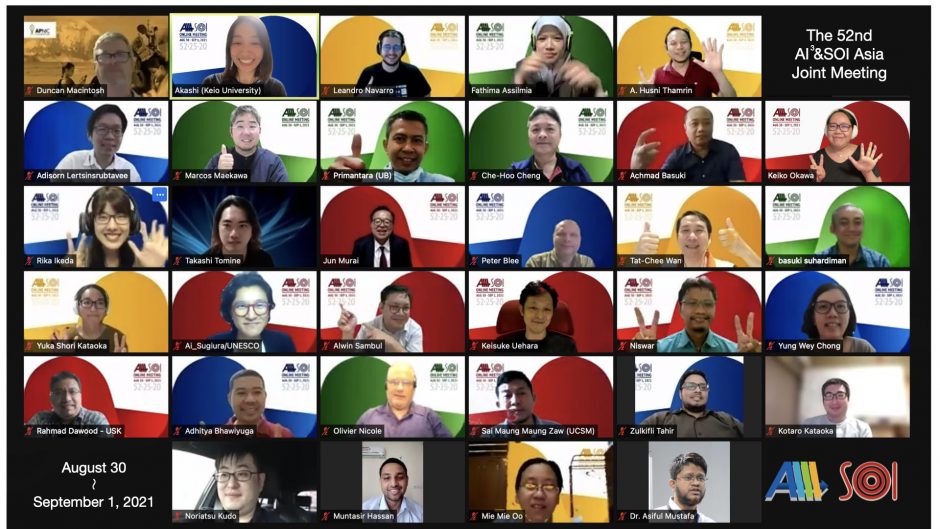
  • The 52nd  AI³ & SOI Asia Joint Meeting was held on August 30- September 1, 2021.

    The 52nd  AI³ & SOI Asia Joint Meeting was held on August 30- September 1, 2021.

    The 52nd  AI³ & SOI Asia joint meeting was held with great success and progress on August 30- September 1, 2021, 14:00-17:00 (GMT+9) online.

    The Meeting brought together members of both projects to share ideas, experiences, and updates, network with peers, and design policies related to the community’s future.

    Meeting Summary Report

    The 52nd AI3&SOI Asia Joint Meeting CONFERENCE WEBSITE