Category: Events

  • SOI Asia featured at KGRI’s “Legend Talk Vol.1” with Prof. Jun Murai

    SOI Asia featured at KGRI’s “Legend Talk Vol.1” with Prof. Jun Murai

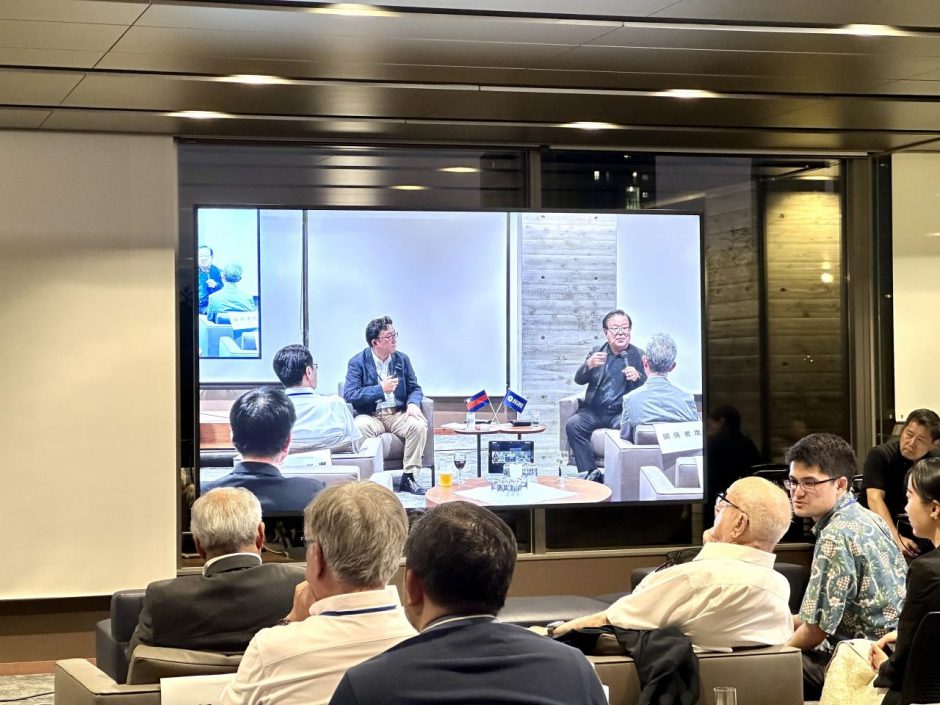
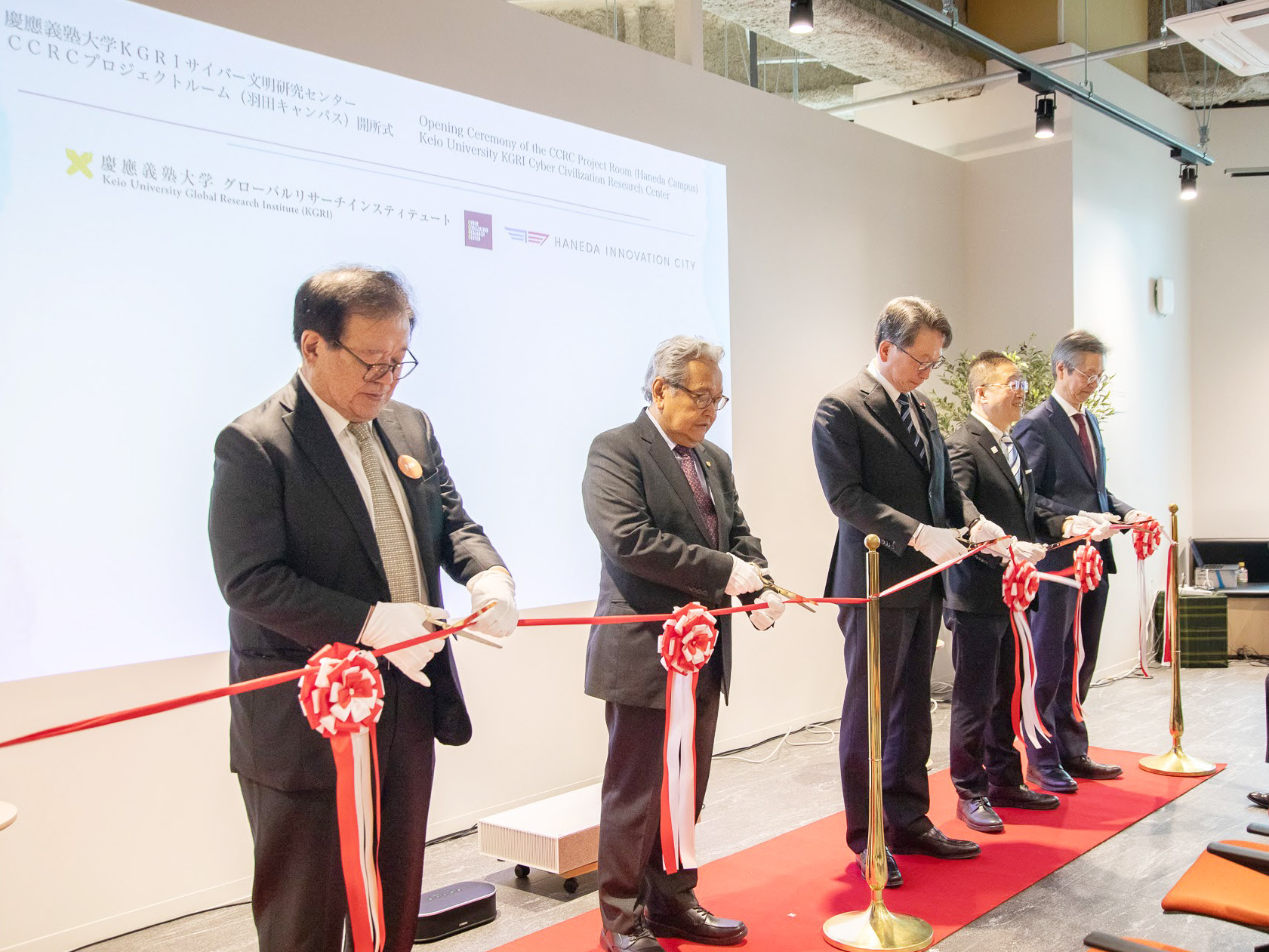
    On August 22, 2025, Keio University Global Research Institute (KGRI) kicked off its new event series “Legend Talk” at the Mita Campus Innovation Lounge. Themed “The Future We Build with Technology — Fukuzawa Yukichi’s Vision,” the event featured the Cyber Civilization Research Center (CCRC), with a showcase of research activities and a dialogue between Professor Jun Murai, Co-Director at KGRI, and Tatsuya Kurosaka, Project Associate Professor at Keio University.

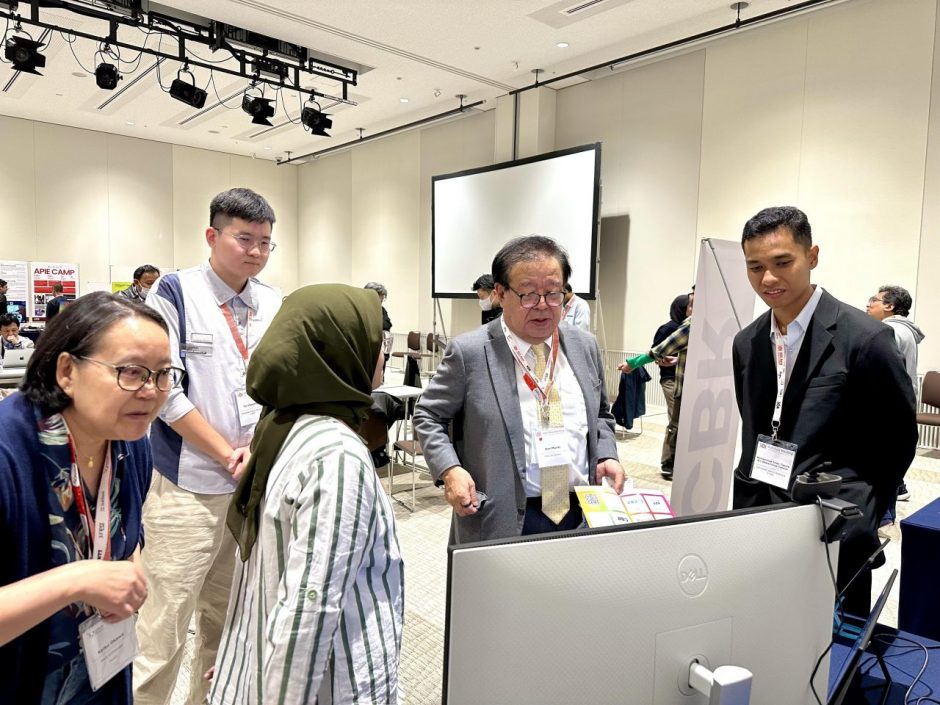
    The evening opened with the CCRC Overview poster session, where guests could meet project members and learn more about each initiative. Among them, the Asia Pacific Resilient Society (APRS) Task Force — essentially SOI Asia — presented its activities through posters and videos, highlighting SOI Asia’s role in building collaborative education and research opportunities across the Asia-Pacific region.

    Tatsuya Kurosaka and Jun Murai (on the right)

    During the public talk, Murai and Kurosaka explored the future of the Internet, AI, and society through the lens of cyber civilization. A particularly memorable moment came when Murai referenced Keio University founder Yukichi Fukuzawa’s 19th-century vision of a connected world. He shared a drawing from Seiyō Jijō (Conditions in the West), where the globe is connected by electric wires — an early vision of what would become today’s Internet.

    The session concluded with an open networking exchange among faculty, students, and corporate participants. The event not only celebrated Fukuzawa’s foresight but also connected it to ongoing CCRC initiatives, demonstrating how research, innovation, and collaboration continue to shape the future. SOI Asia is honored to be part of this dialogue, contributing to the vision of an interconnected Asia-Pacific community.

  • Exploring Pathways for Inclusive Internet Governance at APAN 60

    Exploring Pathways for Inclusive Internet Governance at APAN 60

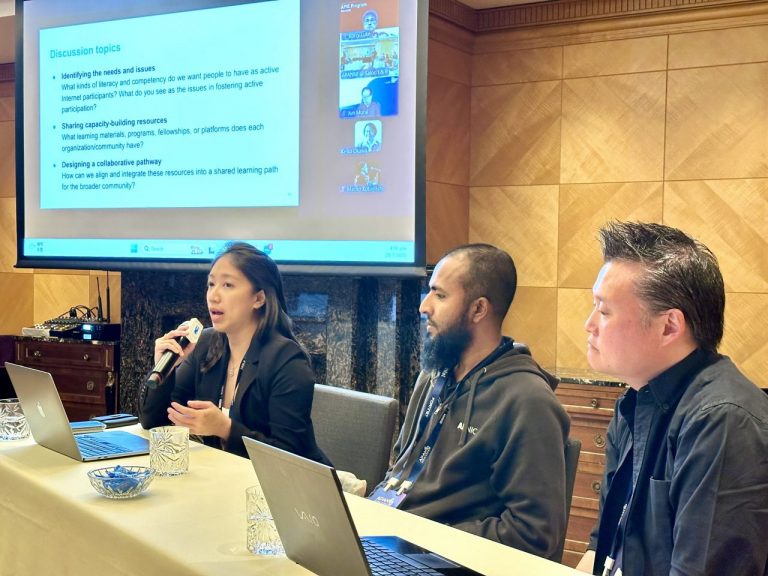
    On July 29, 2025, SOI Asia hosted the panel session Participating in the Internet: Internet Governance for Everyone” at the Asia Pacific Advanced Network Conference 60 (APAN60) in Hong Kong. The 90-minute discussion brought together prominent voices in Internet governance to explore how capacity-building initiatives can foster meaningful participation in shaping the Internet’s future.

    Panel session venue at the Grand Hyatt Hotel in Hong Kong.

    The panel was co-chaired by Ms. Mariko Kobayashi (WIDE Project) and Mr. Korry Luke (Keio University) and featured:

    • Jun Murai – Senior Advanced Research Professor, Keio University / Founder, WIDE Project (online participation)
    • Yien Chyn Tan – Director of Stakeholder Engagement, ICANN APAC
    • Md. Abdul Awal – Network Analyst and Trainer, APNIC
    • Edmon Chung – CEO, DotAsia

    Identifying the Needs and Issues

    The session opened with Prof. Jun Murai’s overview of how the Internet works—its open, distributed, and multi-stakeholder nature—and the evolving ways it connects people, from global satellite coverage to experimental initiatives. Korry Luke followed introducing the new SOI Asia online course Participating in the Internet.

    Jun Murai started the session with important highlights of the Internet.

    Panelists then explored the skills and literacy needed for active Internet participation. Edmon Chung started highlighting the importance of understanding cultural characteristics in Asia as a starting point for meaningful engagement. Md. Abdul Awal shared insights from APNIC’s experience in fostering a collaborative culture across its community. Yien Chyn Tan offered perspectives from Southeast Asia, noting encouraging progress in engagement over the past year while emphasizing the need to broaden outreach beyond youth audiences.

    Sharing Capacity-Building Resources

    In the second part of the discussion, panelists introduced the capacity-building programs their organizations offer. Awal described APNIC’s hands-on training initiatives and commended SOI Asia’s APIE Program as a unique opportunity for younger students to gain practical Internet engineering skills. Chung reflected on the fact that the challenge is not a shortage of fellowships or programs, but rather a need to generate sustained interest and ensure long-term engagement. He emphasized the value of alumni networks, opportunities for policy involvement, and creating pathways for organizations to welcome fresh voices into decision-making spaces.

    Abdul Awal (APNIC) describes valuable opportunities available for younger generations in the field.

    Tan outlined the range of ICANN-supported programs and acknowledged that the abundance of opportunities can sometimes leave learners uncertain about where to begin. She called for closer collaboration among stakeholders to help participants navigate these options more effectively, highlighting the importance of language accessibility and the need to involve the private sector in addressing funding and resource challenges.

    Designing a Collaborative Pathway

    The final segment of the session focused on how these diverse efforts could be better integrated into a cohesive, collaborative pathway for Internet governance participation. Drawing on their experience, Prof. Murai and Mr. Luke emphasized the importance of aligning regional strengths to support participants over the long term. Ms. Kobayashi proposed that the community should consider a “career ladder” approach—enabling individuals to progress from initial engagement to more advanced, sustained roles in the Internet governance ecosystem.

    On screen, Jun Murai shows the coverage of research and networks in the Asia Pacific.

    The discussion concluded with a shared understanding that collaboration, accessibility, and retention are key to building a stronger Internet governance community in the Asia-Pacific.

    Looking Ahead

    The discussions revealed both shared priorities and practical steps toward stronger collaboration in the Asia-Pacific Internet governance community. Participants agreed on the importance of aligning resources, addressing barriers such as language and access, and creating clear pathways for ongoing participation.

    Panelists, organizers and participants after the Q&A that closed the session.

    As Prof. Murai noted, the Asia-Pacific has a unique role to play not only within the region but also in shaping global Internet governance. This conversation is just the beginning of a longer, collaborative journey.

  • Summary Report: SOI Asia Monthly Online Seminar

    Summary Report: SOI Asia Monthly Online Seminar

    Monthly Seminars are online gatherings consisting of the following:
    ・Share updates from each member site.
    ・Share each site’s knowledge and explore the possibility of collaboration within the community.

    Schedule of the AI³ SOI Asia Monthly Online Seminar:

    Last Wednesday of every month

    Target: Faculty members, staff, and students of AI³ /SOI Asia community
    Time: (60 – 90 min)
    ・ 3:15 P.M.- (GMT + 6)
    ・ 4:15 P.M.- (GMT + 7)
    ・ 5:15 P.M.- (GMT + 8)
    ・ 6:15 P.M.- (GMT + 9)

    AI³ SOI Asia Monthly Online Seminar Schedule is as follows.:

    DayDiscussion Topic
    17 Dec
    2025
    #48. Project update
    26 Nov
    2025
    #47. Project update
    29 Oct
    2025
    #46. Project update
    24 Sep
    2025
    #45. Project update
    27 Aug
    2025
    #44. Project update
    30 July
    2025
    #43. Project update
    25 June
    2025
    #42. Project update
    28 May
    2025
    #41. Project update
    30 Apr
    2025
    #40. Project update
    26 Mar
    2025
    #39. Project update
    22 Jan
    2025
    #38. Project update
    18 Dec
    2024
    #37. Project update
    27 Nov
    2024
    #36. Project update
    30 Oct
    2024
    Cancel – Conjunction with Directors Meeting
    25 Sep
    2024
    #35. Final presentation – APIE Camp #04 at UNHAS and USM
    21 Aug
    2024
    #34. CBR updates
    31 Jul
    2024
    #33. W3C Sharing and AINTEC Preparation
    26 Jun
    2024
    #32. Presentation and CBR updates
    22 May
    2024
    #31. APIE Advanced Camp (Keio) final presentation
    24 Apr
    2024
    #30. Sub-projects update
    27 Mar
    2024
    #29. APIE Camp (USM) final presentation
    21 Feb
    2024
    #28. Sub-projects update
    31 Jan
    2024
    #27. Sub-projects update
    20 Dec
    2023
    #26. CBR Update
    29 Nov
    2023
    #25. EBA fieldwork final presentation (EBA Hokkaido 2023)
    25 Oct
    2023
    #24. CBR Update
    27 Sep
    2023
    #23.EBA fieldworks final presentation (EBA Minamata 2023 and EBA UM 2023)
    30 Aug
    2023
    #22. APIE camp (ITB) final presentation
    26 Jul
    2023
    #21. Connected! National University of East Timor (UNTL), Timor-Leste
    28 Jun
    2023
    #20. CBR Update
    May 2023Cancel – Conjuction with Directors Meeting
    26 Apr
    2023
    #19. CBR Update and Directors Meeting update
    29 Mar
    2023
    #18. EBA Kumamoto fieldwork final presentation (Available in Youtube!)
    22 Febr
    2023
    #17. APIE Camp final presentation
    25 Jan
    2023
    #16. Research presentation by Fathima Assilmia (Keio University Graduate School of Media Design)
    21 Dec
    2022
    #15. Community Based Research (CBR) Projects update
    30 Nov
    2022
    #14. Community Based Research (CBR) Projects update
    26 Oct
    2022
    #13. Research presentation by Praveen Tammana and Harish S A (Indian Institute of Technology, Hyderabad (IITH))
    28 Sep
    2022
    #12. Acceptable Use Policy (AUP) for ARENA-PAC
    24 Aug
    2022
    #11. Internship program final presentation
    27 Jul
    2022
    #10. Survey about the learning/teaching situation during the pandemic of COVID-19
    29 Jun
    2022
    #9. Evidence Based Approach (EBA) Project, participants’ session and update from interns
    25 May
    2022
    #8. Community Based Research (CBR) and APIE update
    27 Apr
    2022
    #7. AI³/SOI Asia Community Based Research (CBR) Project and Call for Internship programs
    30 Mar
    2022
    #6. Presentation by AI³/SOI Asia interns 
    23  Feb
    2022
    #5. AI³/SOI Asia CBR and research collaboration and Update from Interns
    26  Jan
    2022
    #4. Research collaborations in non-terrestrial networks, dynamic networking, data science, IoT, and disaster recovery
    22 Dec
    2021
    #3. Open badge based platform for AI³ /SOI Asia_Community Based Research (CBR) Project
    24 Nov
    2021
    #2. UNESCO Open Science Recommendation, what implementation’s mechanisms for the Asia and the Pacific Region?
    27 Oct
    2021
    #1. Ice-breaking

    AI³ SOI Asia Monthly Online Seminar Schedule

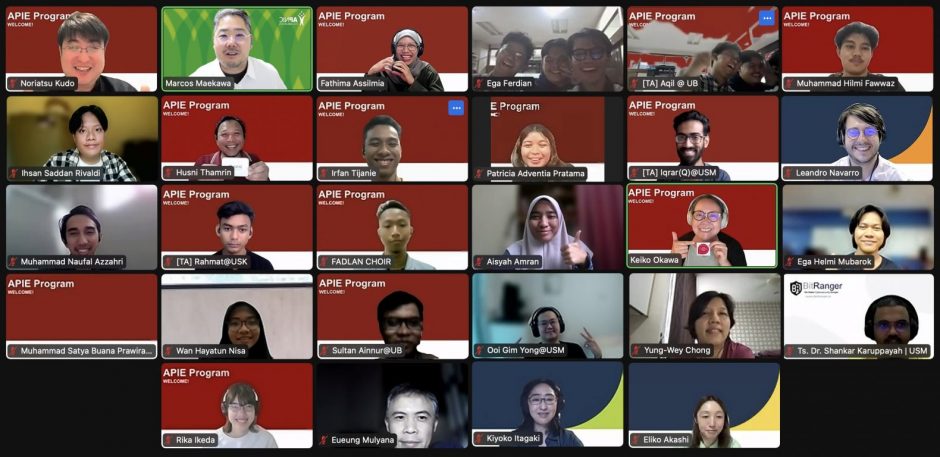
    SOI Asia started online gatherings during the COVID pandemic, to keep the community united and ensure that information was shared smoothly. In the 52nd AI³ & SOI Asia Joint Meeting (2021), members decided that this kind of gathering should be held monthly and named it AI³ & SOI Asia Monthly Seminar since October 2021. (For more details, please refer to the meeting summary report.)

  • Strengthening Inxignia’s presence in Asia-Pacific: Highlights from the MicroCASA consortium

    Strengthening Inxignia’s presence in Asia-Pacific: Highlights from the MicroCASA consortium

    On October 29, SOI Asia delivered presentations at the MicroCASA Project Consortium meeting, held from October 28 to 30, 2024, at SOI Asia partner institution Ateneo de Manila University (ADMU) in Manila, Philippines. This meeting was part of a series of discussions organized by MicroCASA Erasmus+ under the theme “White Paper: Action Plan for Micro-credentials Adoption in Higher Education for Southeast Asian Countries.”

    Achmad Husni Thamrin from Keio University introduced SOI Asia, ARENA PAC, and Inxignia’s current status and future direction. Husni highlighted that while the Inxignia team is advancing technologies related to microcredentials, they anticipate that MicroCASA partners will lead in establishing best practices for issuing microcredentials and promoting inter-institutional recognition.

    Husni introduces SOI Asia at the Microcasa meeting in Manila.
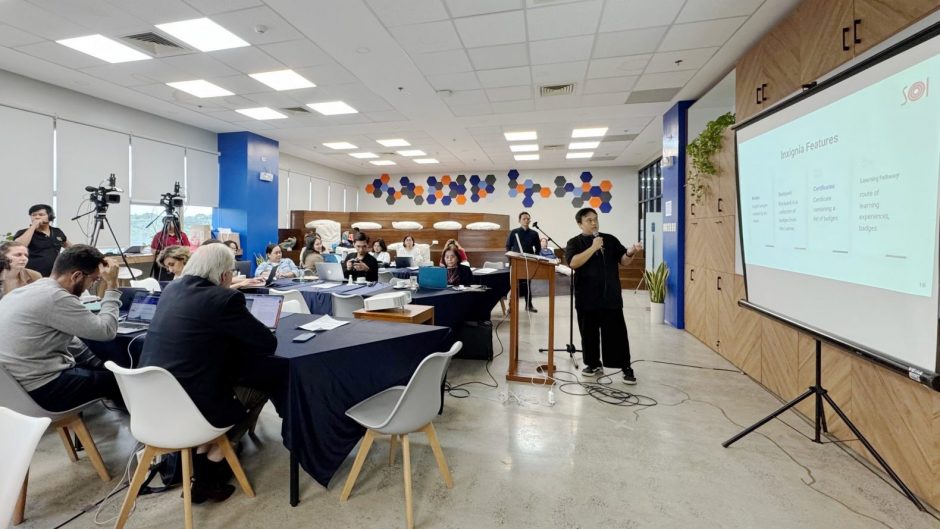
    Andrey demonstrates Inxiginia’s features.

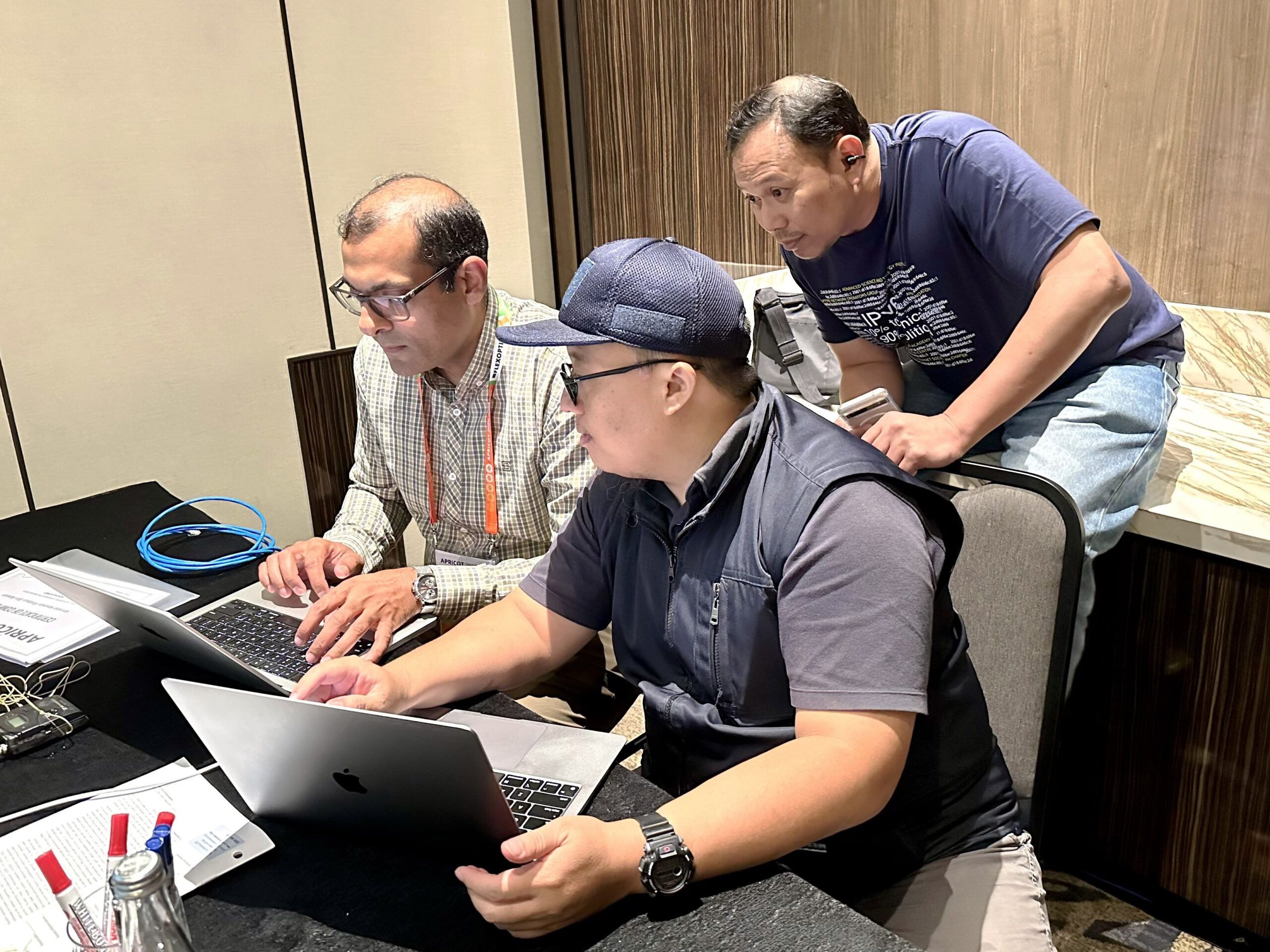
    In a second session, Andrey Ferriyan, a member of the Inxignia team at Keio University, addressed inquiries and provided hands-on guidance on how to issue badges and certificates using Inxignia. Both sessions resulted in valuable insights, with MicroCASA partners asking detailed questions about Inxignia and suggesting several new features.

    From SOI Asia, Achmad ‘Abazh’ Basuki (UB) and Alwin (UNRAST) also attended the meeting. The team left Manila looking forward to strengthening collaboration with MicroCASA partners to promote microcredentials and digital badges across the Asia-Pacific region.

  • 58th AI³/SOI Asia Joint Online Meeting (BUET)

    58th AI³/SOI Asia Joint Online Meeting (BUET)

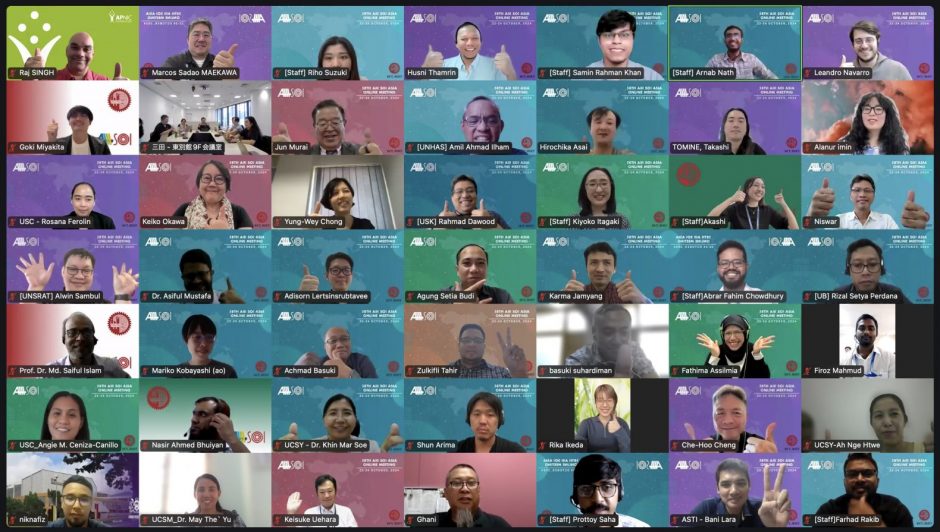
    We are excited to share that the 58th AI³/SOI Asia Joint Meeting will be held online from October 22 to 24, 2024. This event will be co-hosted by Bangladesh University of Engineering and Technology (BUET).

    Meeting WEBSITE: https://58th-ai3soi.buet.ac.bd/

  • 57th AI³/SOI Asia Directors Meeting Hosted by the University of San Carlos (USC)

    57th AI³/SOI Asia Directors Meeting Hosted by the University of San Carlos (USC)

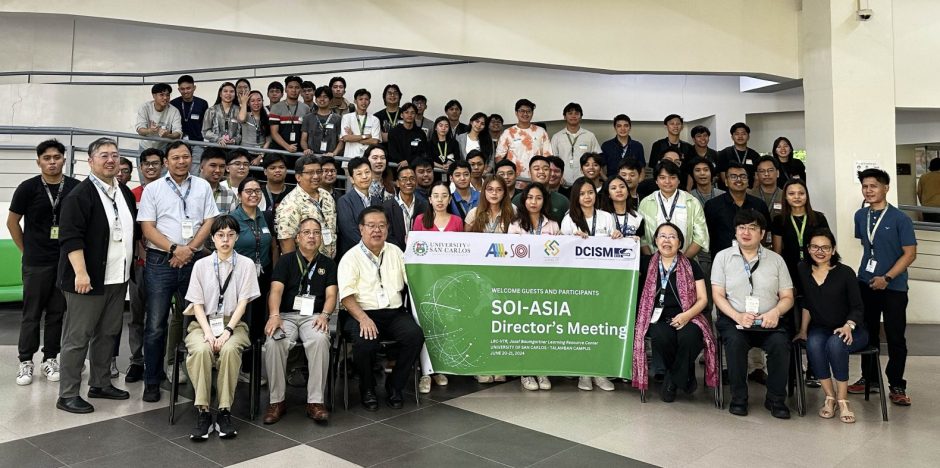
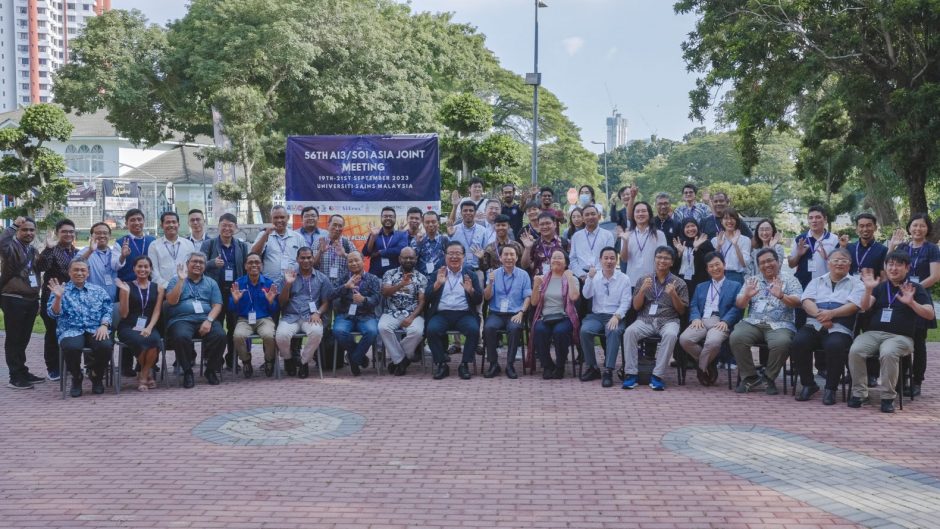
    The 57th AI³/SOI Asia Directors Meeting was held at the USC Talamban Campus from June 20 to 21, 2024. This meeting saw the participation of 59 core members from higher education institutions across 10 countries, joining both onsite and online. The meeting focused on sharing SOI Asia’s activities over the past eight months and discussing future initiatives.

    Meeting WEBSITE is HERE.

    Despite a period of reduced involvement with the SOI Asia community, we are delighted to have USC rejoin us. We also appreciate USC’s local hospitality!

    The next joint meeting is scheduled to take place in October in Bangladesh, hosted by the Bangladesh University of Engineering and Technology (BUET).

  • APNIC Foundation featured SOI Asia and AI³ during the APNIC 56 in Kyoto

    APNIC Foundation featured SOI Asia and AI³ during the APNIC 56 in Kyoto

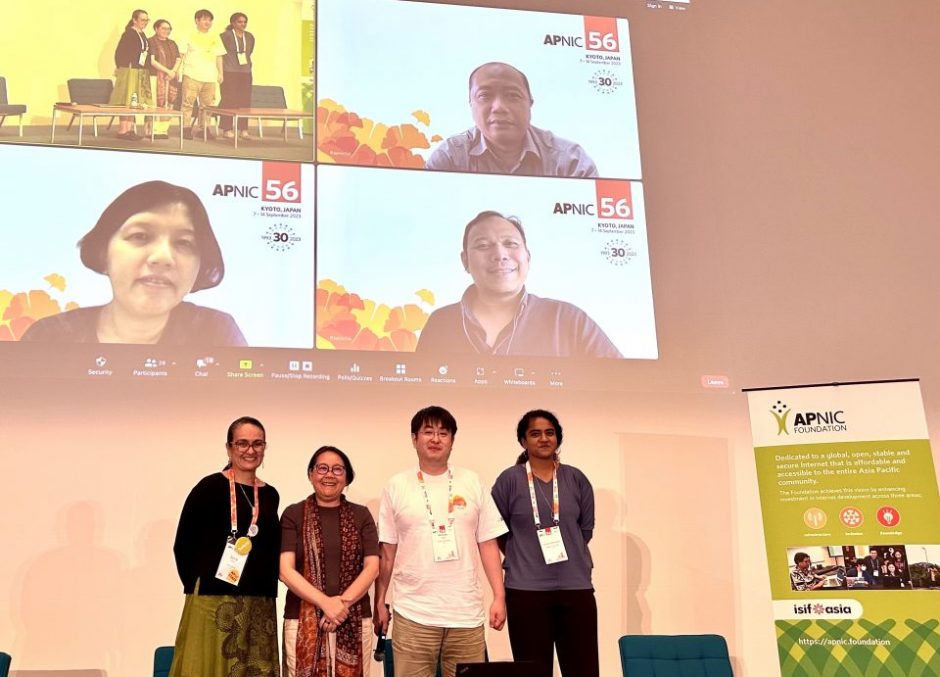
    On September 12, the APNIC Foundation featured SOI Asia and AI3 in its session during APNIC 56, a conference that was held in Kyoto, Japan, from September 13-15.

    The session started with the highlights of the Foundation programs and projects in 2023, presented by the APNIC Foundation acting CEO (at that moment, Head of Programs and Partnerships), Sylvia Cadena.

    Following that, Keiko Okawa, professor at Keio University and director of SOI Asia, started a retrospective of SOI Asia and AI3 activities on capacity building (human resources development) and Internet-related research. Keiko followed a timeline starting in 1995 when this community started and then led the talk to the present and how she envisions the future of this community. During her talk, Keiko was accompanied by other speakers who were also related to the projects.

    Achmad Husni Thamrim, lead of AI3, looked back to the satellite-based connectivity initiatives in Southeast Asia led by AI3 and its contribution to Internet-related research collaboration and the development of the Internet in the region.

    The Lead of APIE, Noriatsu Kudo, shared how the program contributes to fostering a new generation of talented Internet engineers who can head up the future of the Internet. Sai Veerya Mahadevan shared her experience as a teaching assistant and her thoughts on the program. She emphasized the safe environment created for learners to learn, unlearn, make mistakes, and learn from them.

    Achmad Basuki explained his involvement to the community throughout the years, particularly the recent efforts to ARENA-PAC, which aim to link several global research and education networks (REN) in the region.

    Yung-wey Chong introduced Community-based research activities (CBRs) and stressed the importance of conducting research that involves stakeholders and brings back to the local communities.

    Keiko and Sylvia concluded the session by emphasizing the value of collaboration to foster a new generation of Internet engineers and create a brighter future.

    Check the video archive of the session here.

  • SOI Asia and partners featured at the IGF 2023 Kyoto

    SOI Asia and partners featured at the IGF 2023 Kyoto

    From October 8 to 12, 2023, the WIDE Project participated in the 18th Internet Governance Forum (IGF Kyoto 2023) held at the Kyoto International Conference Center, Japan. The IGF is an annual meeting hosted by the United Nations where a wide range of stakeholders engage in dialogue on Internet governance, among several other issues related to the Internet.

    In a booth at the IGF Village, WIDE exhibited research and educational activities conducted in cooperation with other countries, mainly in the Asia-Pacific region, and featured SOI Asia & AI3 (including APIE) and ARENA-PAC activities.

    Takumi Ishirara (Keio University) welcomed visitors and explained about the WIDE project.
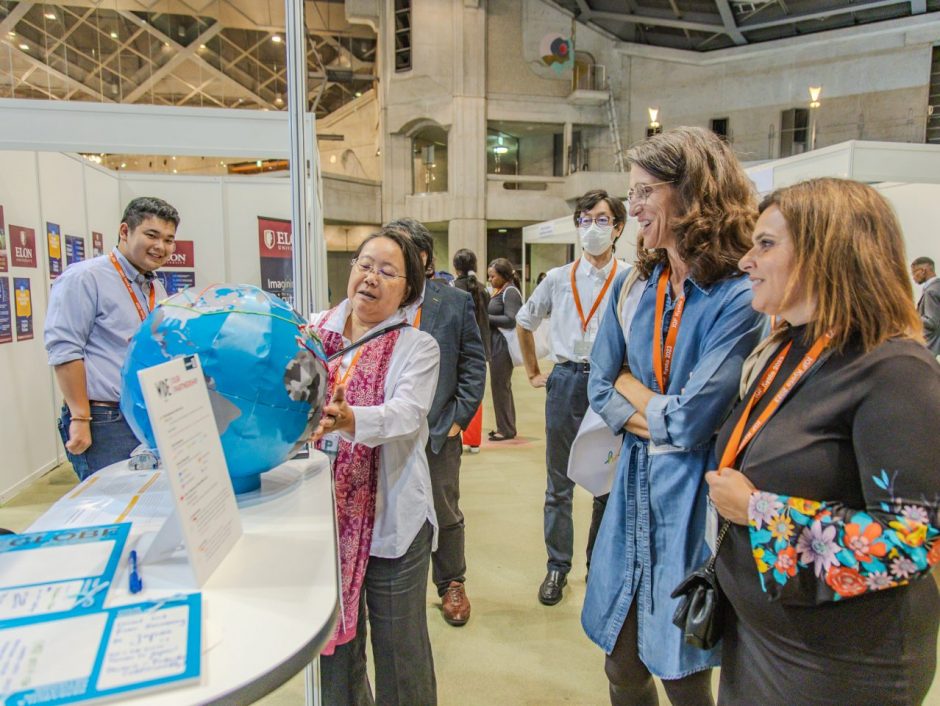
    On the left, Dr. Fathima Assilmia (Keio University), who created the globe display, with Prof. Jun Murai.

    The exhibition emphasized the importance of global collaboration in research and education networks. Videos introduced project information and activities, and visitors contributed to the analog visualization of research and education networks in their region and also shared their “dream RENs.”

    From the left: Prof. Hiroki Esaki (University of Tokyo), Prof. Hideyuki Tokuda (president of NICT), Prof. Keiko Okawa, Prof. Jun Murai, and Dr. Noriatsu Kudo.
    WIDE Project founder Prof. Jun Murai (left) and APNIC Foundation CEO Sylvia Cadena at the WIDE booth.

    For more details about the WIDE project participation at the IGF 2023 Kyoto: https://www.wide.ad.jp/News/2023/20231023_e.html

  • 55th  AI³ & SOI Asia Directors Meeting – Summary

    55th  AI³ & SOI Asia Directors Meeting – Summary

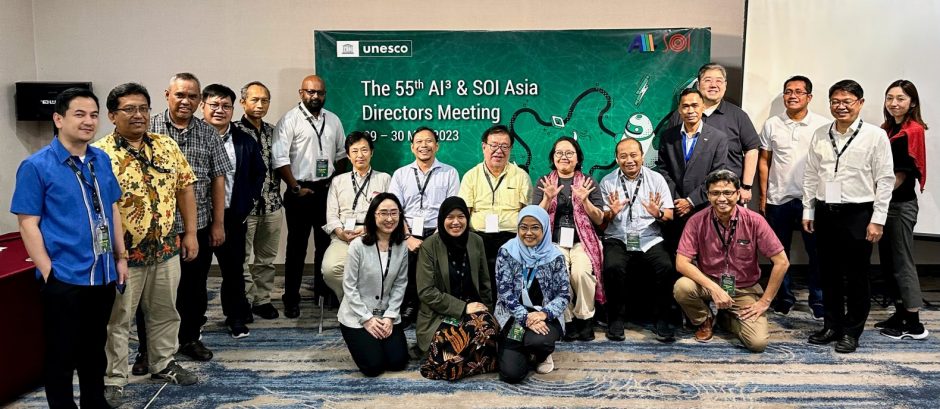
    On May 29-31, UNESCO Jakarta hosted the 55th  AI³ & SOI Asia Directors Meeting in the capital of Indonesia. The meeting was held back to back with the Joint Workshop on Open Science Infrastructure and Leveraging on Artificial Intelligence for An Effective Open Science Platform and STEPAN (Science Technology Engineering & Innovation Policy Asia and the Pacific Network) 3rd Annual Meeting, both held on May 31-June 1.

    Representatives of partner institutions gathered in Jakarta

    Directors Meeting – DAY 1

    More than 30 representatives from SOI Asia and  AI³ partner institutions attended online and onsite. Unlike regular joint meetings, the main agenda comprised discussions and project updates such as Community-based Research initiatives (CBRs), APIE, EBA, and ARENA-PAC.

    ARENA-PAC—a project of APIDT Infrastructure Pty Ltd and operated by WIDE,  AI³ and SOI Asia projects with APNIC—highlighted the formation of a tech community task force as the primary outcome of this meeting. The team will meet monthly starting in June to discuss strategies and directions regarding using this global research network, including as a sandbox for research.

    Timor Leste had a dedicated session where Prof Domingos de Souza Freitas (UNTL) shared updates about the development of their REN. Participants shared ideas for research topics and explored potential collaboration with SOI Asia partners. The team is working to connect the University of Timor Lorosa’e (UNTL) to global RENs in 2024.

    During the Evidende-Based Approach project (EBA) session, the leads introduced the proposal of a faculty meeting scheduled for late 2023/early 2024. This gathering expects to provide representatives from each institution with EBA fieldwork experience in Minamata, Japan. The EBA team also presented their upcoming fieldwork programs on cultural preservation in Hokkaido (Japan), Malaysia, and environmental issues in East Kilimantan (Indonesia). In addition, the team called for collaboration for future fieldwork.

    The spotlight at the APIE (Asia Pacific Internet Engineering) session focused on discussions about the Internship component. APIE is an education program for building essential skills and knowledge to improve cyberspace for society. It comprises four main components: online self-paced courses, real-time online workshops, hands-on camps, and internship programs. In addition to current internship programs in academia, the team is trying to increase the number of institutions and enterprises accepting APIE learners for internship programs.

    Directors Meeting – DAY 2

    On Day 2, the highlights were the discussions on Emergency networks, Non-terrestrial networks (NTN) and Community-based research (CBR).

    The discussions started asking about using satellite links for emergency networks during disasters. Understanding that every location has different needs, the team heard feedback from Bangladesh and Indonesia. The representative from Bangladesh shared the current state of connectivity in the economy and the concerns about the impact of cyclones on the local environment. The representatives from Indonesia said they also consider volcanic activities, floods, and earthquakes (and tsunamis). The team concluded that they would focus on deploying networks and capacity building.

    This session was followed by discussions on the use of Non-terrestrial Networks (NTNs) in urban environments, raised technical questions on overcoming existent barriers, and information sharing about existing research on emergency networks in Indonesia.

    In the CBRs session, the focus was on sharing the current status of contracts and service agreements and defining milestones and deliverables. The team also agreed to start a website for publicizing and raising the visibility of each research activity. As of now, there are seven different types of research ongoing.

    Directors Meeting – DAY 3

    The meeting finished with a joint workshop with STEPAN (Science, Technology, Engineering, and Innovation Policy Asia and The Pacific Network), a UNESCO initiative, on Open Science Infrastructure and Leveraging Artificial Intelligence for An Effective Open Science Platform. The main objectives are:

    • Discuss how RENs can enable Open Science in Region and how to engage them.
    • Identify the Open Science Platform/platform model for Asia and the Pacific in terms of infrastructure.
    • Discuss the Indicators to Monitor Open Science Infrastructure Implementation in the region.
    • Discuss how to leverage AI technology adoption to support OS implementation.
    • Identify potential projects/collaboration for both parties to ensure effective performance of Open Science.

    SOI Asia director Prof. Keiko Okawa opened the workshop by addressing the importance of building a solid research community for academic collaboration. SOI Asia representatives Dr. Franz De Leon (ASTI, DOST, Philippines) and Dr. Selvakumar Manickam (National Advanced IPv6 Centre, Universiti Sains Malaysia) joined other panelists sharing best practices of Open Science and Artificial Intelligence Infrastructure in their respective institutions.

  • SOI Asia Team to make a Poster Presentation at ADHO Digital Humanities Conference!

    SOI Asia Team to make a Poster Presentation at ADHO Digital Humanities Conference!

    From 10th to 14th July 2023, Eliko Akashi and Goki Miyakita participated in DH2023 in Graz, Austria.
    They presented specific activities related to Open Science promoted by SOI Asia in the Asia・Pacific region. 

    The scarcity of participants from the Asia・Pacific region provided an opportunity for rich cultural exchange and receiving constructive feedback from attendees. This experience can address potential limitations, and strengthen the project’s credibility, ultimately leading to improved outcomes and impact.

    DH2023: https://dh2023.adho.org/