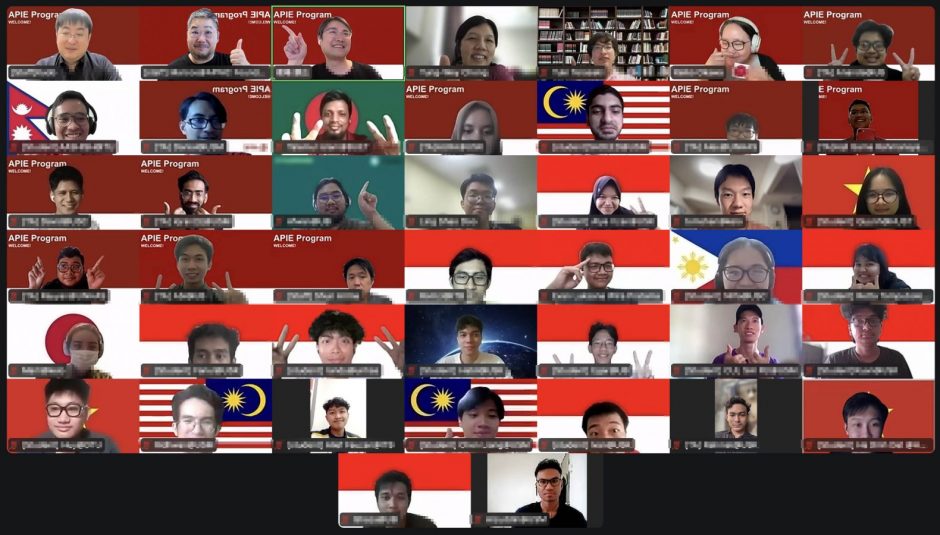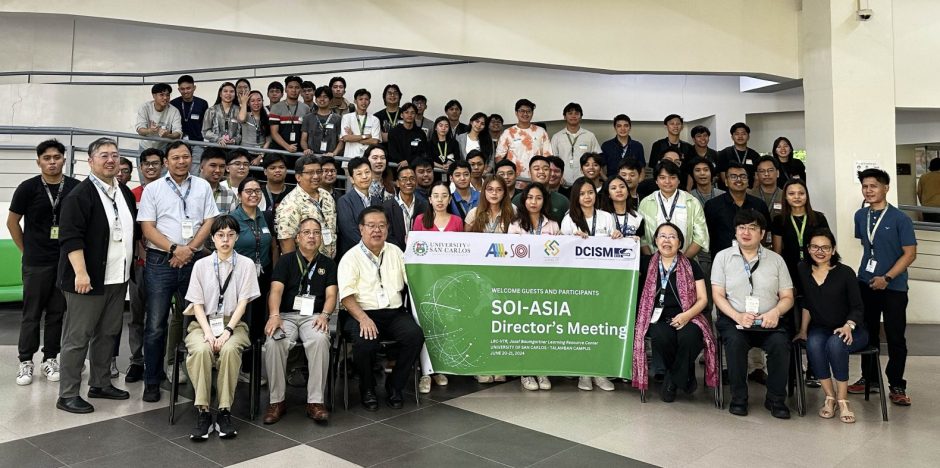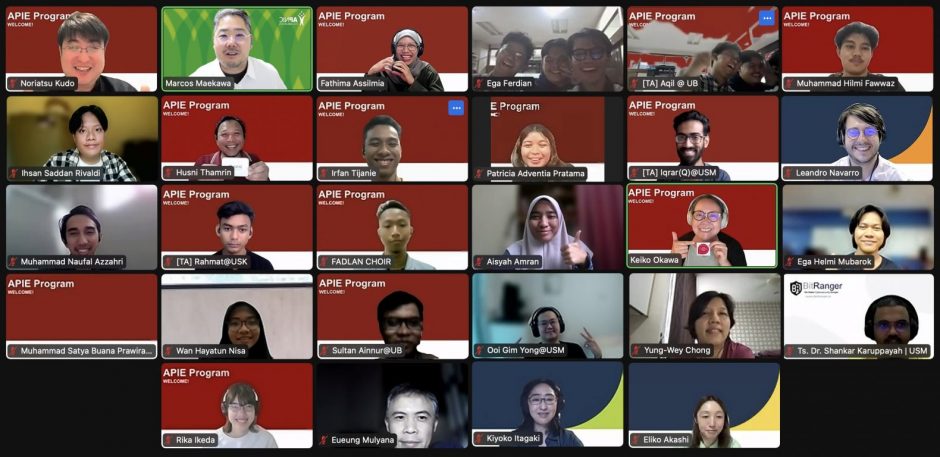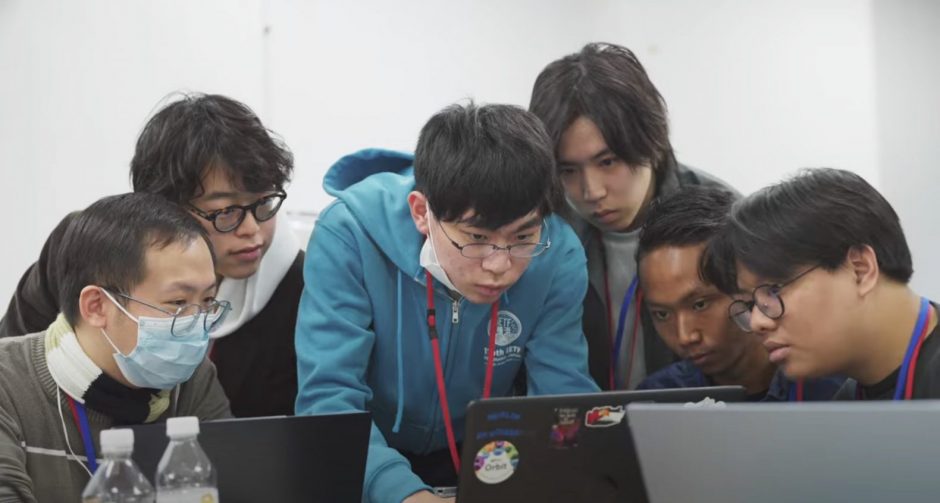
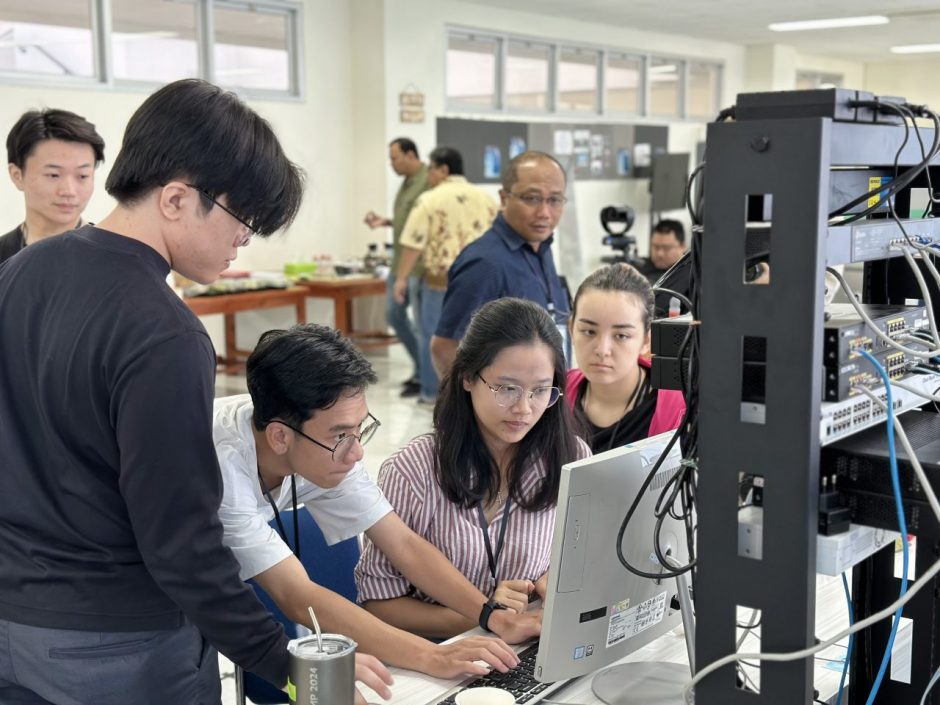
The APIE Advanced Camp, which took place in March at Keio University, has just concluded its first cycle. On May 22, during the SOI Asia and AI3 Monthly Seminar, all four groups presented the web services they had designed over the past couple of months. The projects vary from a material hub platform for APIE learners to an app that reminds users when it is time to take their medication.
In their presentations, all teams addressed the motivation for choosing a determined topic and clearly stated goals and problems to be solved with their design. The demos showed the effort put into the backend development, clarified details for monitoring the services, and revealed the time dedicated to creating appealing and functional front ends. The results impressed the organization team and made the conclusion of the first APIE Advanced Camp more than remarkable. Excellent work, everyone!
To know more about the APIE program and all other activities, visit the website: https://apie.soi.asia/
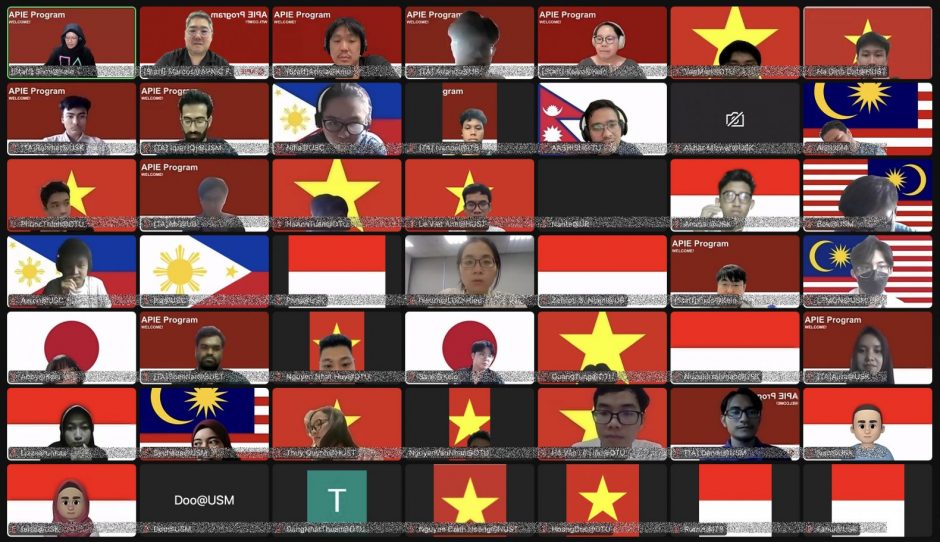
On April 20, the APIE Program opened the fourth batch of its core courses (Online courses 1 and 2 and e-Workshop) and celebrated new records: more than 570 learners registered for the course (as of today), and the first e-workshop (online real-time session) had more than 250 participants, the great majority from SOI Asia partner institutions.
The increase in the number of participants is the result of different efforts. The active participation of APIE alumni students in their own communities and word-of-mouth have spread information and their experiences in previous batches. Most APIE alumni have also shared their achievements, such as course completion badges, on social media, helping APIE raise visibility among students.
Faculty members have also played essential roles in achieving these numbers. More than 180 applicants came only from the University of San Carlos, where the course expects to support students’ learning outside the classroom.
APIE Engagements in Vietnam
APIE learners and staff in VNNIC headquarters office in Hanoi, Vietnam.
VNNIC (Vietnam Network Information Center) also contributed to the increase in participation in APIE. In addition to strongly supporting the call for participation in Vietnam, VNNIC hosted the first e-Workshop in its offices in Hanoi, Da Nang, and Ho Chi Min. This joint effort aims to create an environment where learners can get language and technical support from the VNNIC staff and make the APIE learning experience smoother and more engaging.
VNNIC office in Da Nang welcomed 11 learners.APIE lead Noriatsu Kudo (on the left) and APNIC Foundation Marcos Maekawa visit VNU-VJU.
The APIE team is also working on other economies to raise the visibility of the programs. On a visit to Hanoi, Vietnam, APIE program lead Noriatsu Kudo and APNIC Foundation project office Marcos Sadao Maekawa met faculty members of the Faculty of Advanced Technologies and Engineering at VNU Vietnam Japan University, which is part of the Vietnam National University. The university showed interest in APIE courses and emphasized that they have much in common with some courses in VNU-VJU, indicating the potential to integrate the course into their computer science and engineering courses.
APIE Core course opens twice a year for the SOI Asia community. A public version of the first online course, “Understanding the Internet,” is also available on FutureLearn. Learn more about other components of the program on the APIE website.
The first APIE Advanced Camp was held from March 11 to 15, 2024, at Keio University Hiyoshi campus in Yokohama, Japan.
All 16 participants from SOI Asia partner universities in Indonesia (Universitas Brawijaya, Institut Teknologi Bandung, Universitas Siyah Kuala) and Malaysia (Universiti Sains Malaysia) were challenged to design a small web service with network monitoring. They were supported by mentors from AITAC, APNIC, the University of Tokyo, and Keio University.
APIE Advanced Camp, a new component of the APIE program, is a five-day training course that focuses on BGP, IXP, SQL, cloud computing, network operation, and web service development. Participants put into practice the skills and knowledge acquired throughout their APIE learning journey, which includes online courses, e-workshops, and a camp.
For the second consecutive time, APIE was proud to welcome three female participants, and hopefully, this trend will continue to rise in future camps.
Watch the digest video below to see the camp’s highlights, and visit the report on the APIE website to learn more.
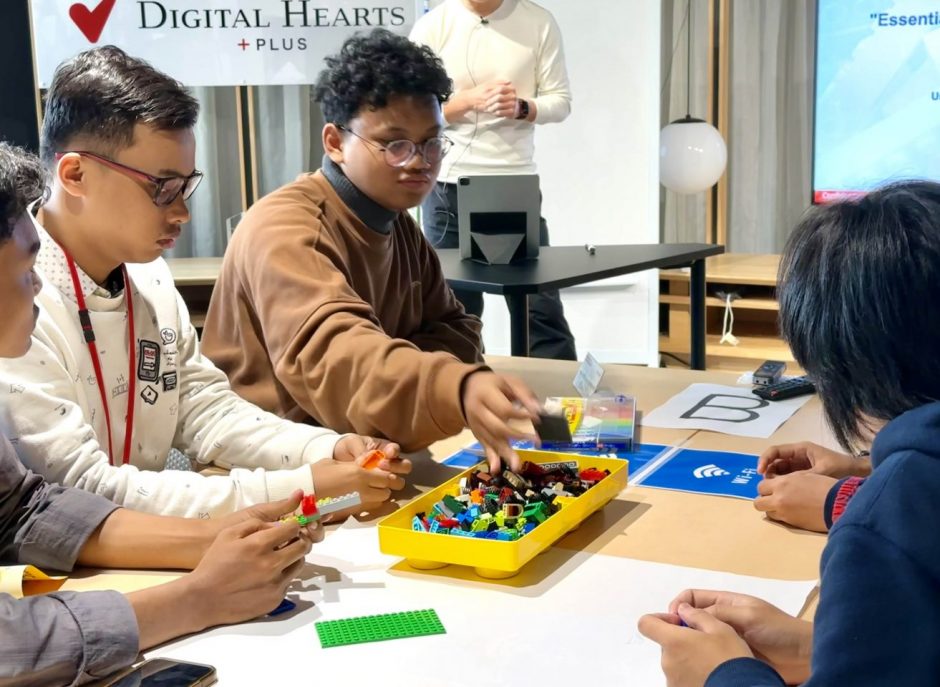
On March 16, sixteen students from the APIE Advanced Camp had the unique opportunity to take a closer look at the world of cybersecurity by participating in a workshop offered by the Ministry of Internal Affairs and Communication (MIC) of Japan. Organized by Digital Hearts Plus Co., Ltd, and held in the company’s well-equipped multiuse facility in Shinjuku (Tokyo), the event marked a significant finale to the participants’ educational journey in Japan.
The workshop had two distinct sessions, each aimed at tackling cybersecurity from different angles. The morning session featured Hiroki Abe, a certified ethical hacker who shared his extensive knowledge and experience in the field. Abe’s discourse centered around understanding hackers’ mindsets. He provided insights into the various strategies employed by cyber attackers and emphasized the importance of thinking like a hacker to anticipate and counteract potential threats effectively. This session was interactive, with participants engaging in exercises designed to immerse them in the cybersecurity landscape.
Ethical hacker Hiroki Abe opens his session introducing his background.Facilitator Takayuki Yamane introduces the goals of the design sprint.
In the afternoon, the focus shifted towards applying creative problem-solving skills to cybersecurity challenges. Takayuki Yamane led a design thinking sprint to encourage students to harness their creativity. The task was to conceptualize a game aimed at educating children about cybersecurity.
Participants listen to Yamane’s guidance before brainstorming ideas for a cybersecurity game for kids.
Through initiatives like this cooperation with different stakeholders, APIE helps to expand the skills and knowledge of the next generation of Internet engineers to meet and overcome the challenges that lie ahead and contribute to the continuous development of the Internet.
As the workshop concluded, each student was awarded a certificate of participation.
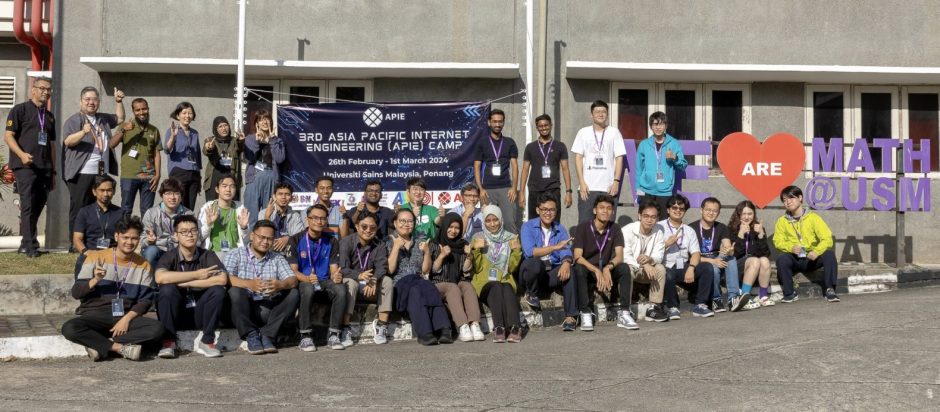
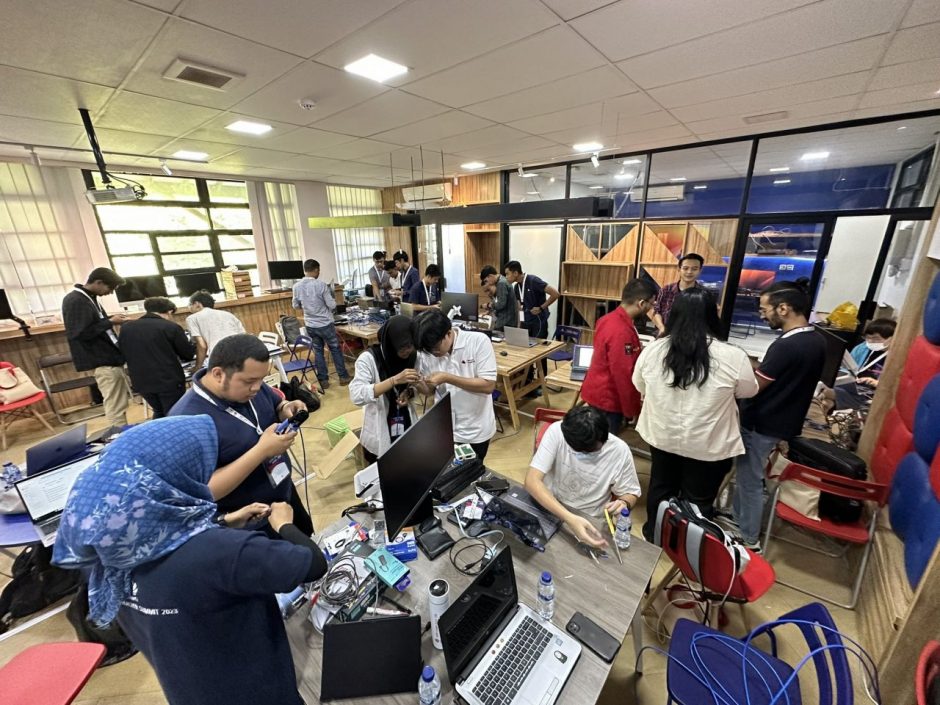
The third APIE Camp took place from February 26 to March 1 at the Universiti Sains Malaysia (USM) on Penang Island, Malaysia, marking USM as the third SOI Asia partner institution to host this event. The inaugural camp was hosted by Keio University in Japan, followed by the Institut Teknologi Bandung in Indonesia.
16 students from SOI Asia partner universities in Malaysia, Indonesia, and Japan put into practice what they have learned online, from the design of networks to DNS configuration and cloud computing. This time, the camp also welcomed the most significant number of female participants and staff, including 3 students and the camp lead, Dr. Yung-wey Chong, from USM.
A summary report of this camp is available on the APIE website. You can also see the camp highlights by watching the digest video below.
SOI Asia and the APIE team would like to send huge thanks to everyone who contributed to this camp! – Camp lead Dr. Yung-Wey Chong, and organization and support teams in Universiti Sains Malaysia (USM) that worked on all logistics and preparation, making it a possible, productive, and pleasant experience for all, – Teaching assistants for the prompt and swift assistance, – APNIC, Amazon Web Services (AWS), and Exabytes Group for the tremendous contributions to empower and inspire participants with your knowledge and expertise, – APNIC Foundation for the essential and constant support toward digital development in the region, – Each APIE Camp participant, for your dedication and efforts to do your best! Congratulations on one more achievement (of many) in this community!
From 7 to 11 August, the second APIE Camp was successfully concluded at the Institut Teknologi Bandung (ITB), located in the city of Bandung, Indonesia. Bandung is the capital of Indonesia’s West Java province, and it is known for its lively university-town feel and relatively cool tropical weather.
For five days, 16 students from SOI Asia partner universities in Indonesia and Malaysia participated in the program. Mentors from APNIC, AWS, University Sains Malaysia (USM), ITB, and Keio University led several sessions and mentored participants during the program. The 5-day curriculum was largely the same as the previous camp conducted in Keio in February 2023.
ITB also conducted another APIE Camp for local students in Bahasa Indonesia. Also, this was also the first time that female learners took part as participants.
APIE Camp provides a project-based intensive curriculum for network design and implementation. The APIE program aims to help learners build essential Internet engineering skills and knowledge to improve cyberspace for society.
Keisuke Uehara and Eliko Akashi traveled to Vietnam to promote collaboration and cooperation for SOI Asia programs EBA (Evidence-Based Approach) and APIE (Asia Pacific Internet Engineering). Ms. Do Thi Thuy Van, COO of Ominext and HUST-Keio alumnus, was the liaison between the SOI Asia team and local institutions.
On May 11, Uehara and Akashi visited the Hanoi University of Science and Technology (HUST) in Vietnam. They met Dr. Nguyen Binh Minh (the director of HUST’s Fintech Center), Dr. Dao Thanh Chung (School of Information and Communication Technology), and Dr. Nguyen Thi Xuan Hoa (vice director of HUST’s Fintech Center).
At HUST: (from the left) Do Thi Thuy Van, Eliko Akashi, Kei Uehara, Nguyen Binh Minh, Nguyen Thi Xuan Hoa, and Dao Thanh Chung.
HUST joined SOI Asia in 2005 and was one of the initial members of the EBA Consortium (2012-2016). The institutions co-hosted an EBA fieldwork program in 2015, and HUST students actively participated in other EBA activities from 2013-2016.
In the following days, the SOI Asia team introduced EBA and APIE to the Vietnam National University’s Vietnam-Japan University (VNU-VJU) rector, Professor Motoo Furuta, and JICA’s Motoi Koike.
SOI Asia team also met with local companies such as HB Lab Joint Stock Co. (HBL) and Orainchain Labs, where parties explored the possibilities for hosting future APIE internship and EBA fieldwork programs.
The first edition of the APIE Camp was successfully concluded last week at Keio University Hiyoshi Campus, Japan.
Facilitators from Bandung Institute of Technology (ITB), University of Science Malaysia (USM), APNIC, and AWS Indonesia mentored 12 students from Brawijaya University (UB) and Syiah Kuala University (USK) to put into practice the skills and knowledge acquired from the APIE Online course and APIE e-Workshop.
APIE Camp provides a project-based intensive curriculum for network design and implementation. The APIE program aims to help learners build essential Internet engineering skills and knowledge to improve cyberspace for society.